Aluminum Casement Windows Built for Philippine Storms
A casement window opens fully on its side hinge — giving 100% of the opening width for cross-ventilation. Closed tight with multi-point locks and double EPDM gaskets for a typhoon-ready seal.
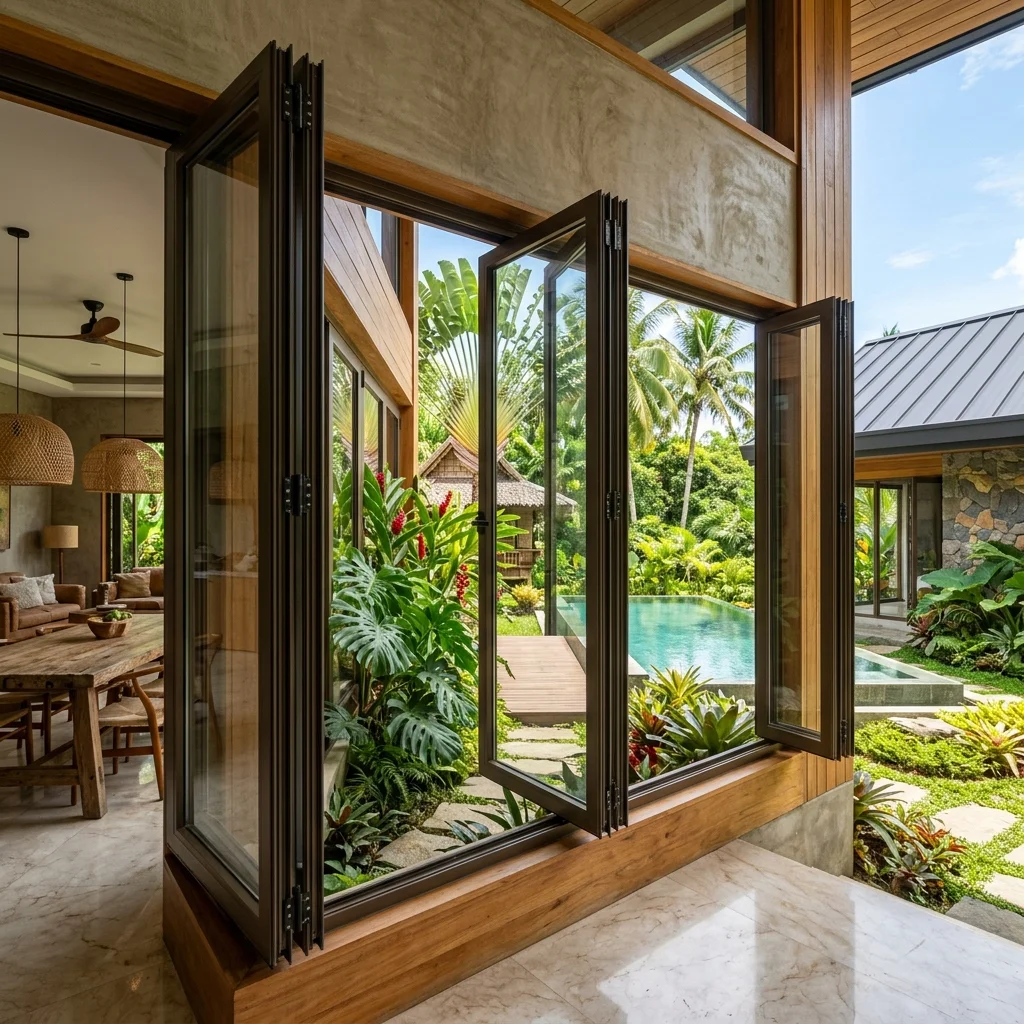
Side-hinged. Fully open.
Tight-sealed closed.
Series 38 and Series 79 premium casement profiles with 4-bar stainless steel friction stays, compression EPDM rubber gaskets, and cam-lock or multi-point locking.
- Extrusion: Series 38 / Series 79
- Aluminum Gauge: 1.2mm to 1.6mm
- Glass: 6mm to 12mm Tempered
- Hinges: 4-Bar Stainless Friction Stays
- Lock: Multi-Point or Cam Lock
Rough Opening
Measured to the finished face. 10mm clearance for shimming.
Frame Anchoring
Set plumb and anchored with stainless screws at 400mm intervals.
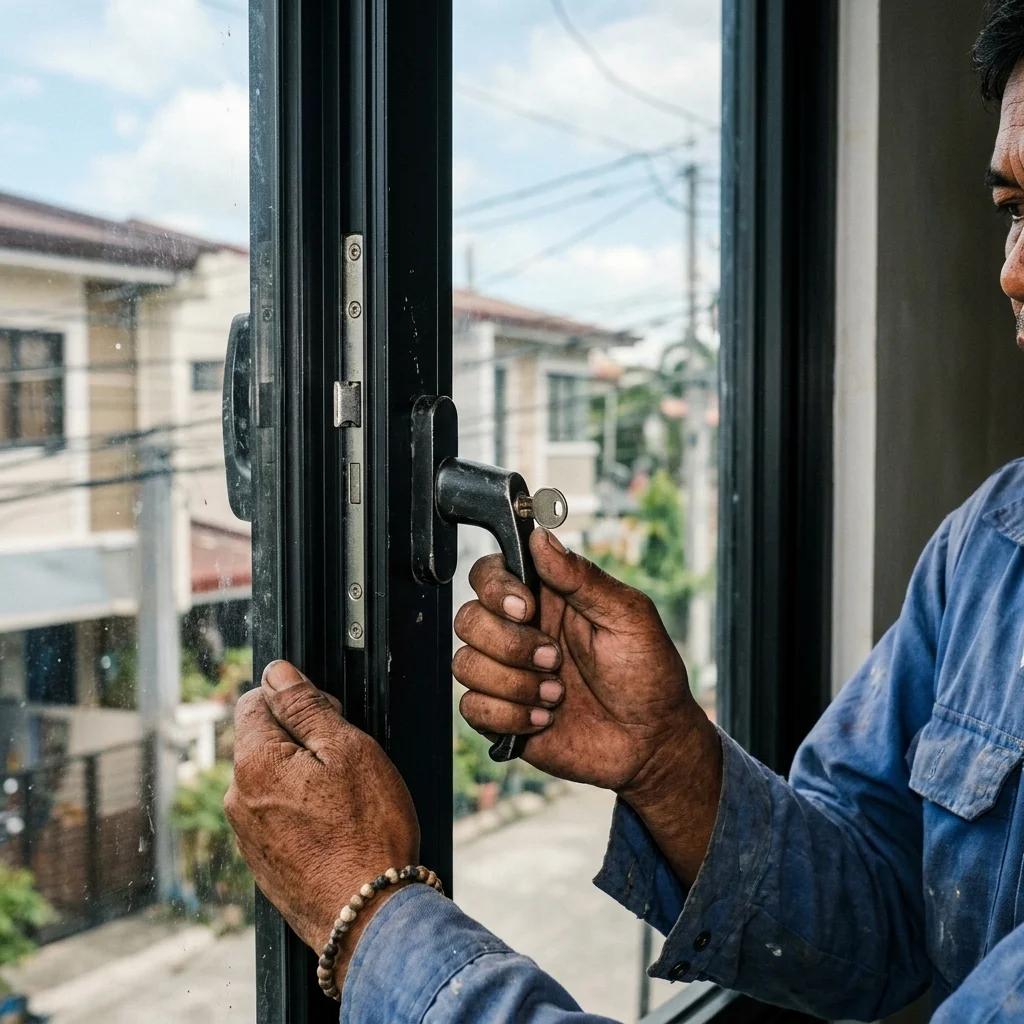
Hardware Installation
Sash hung on 4-bar stays and adjusted for friction torque.
Silicone Seal
Perimeter sealed with neutral-cure silicone. Weather seal verified.
Our Local Portfolio
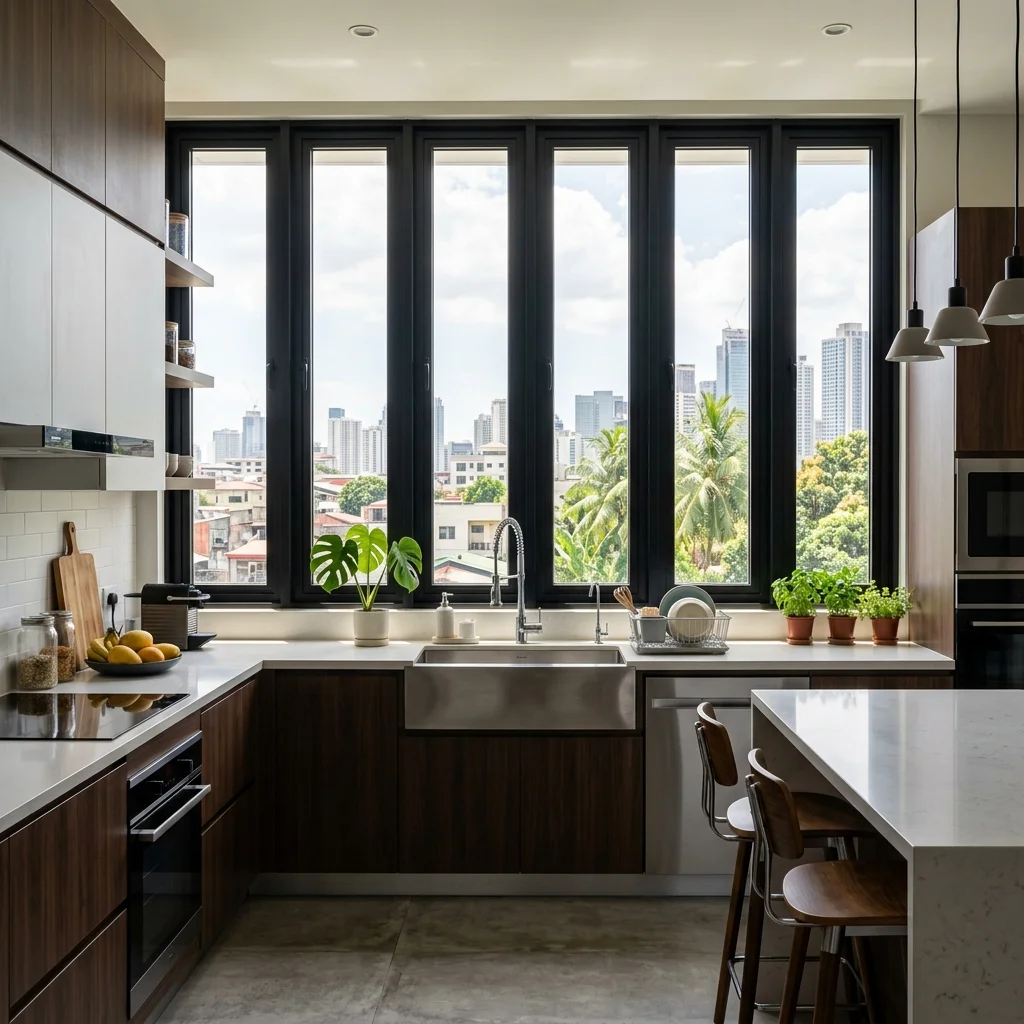
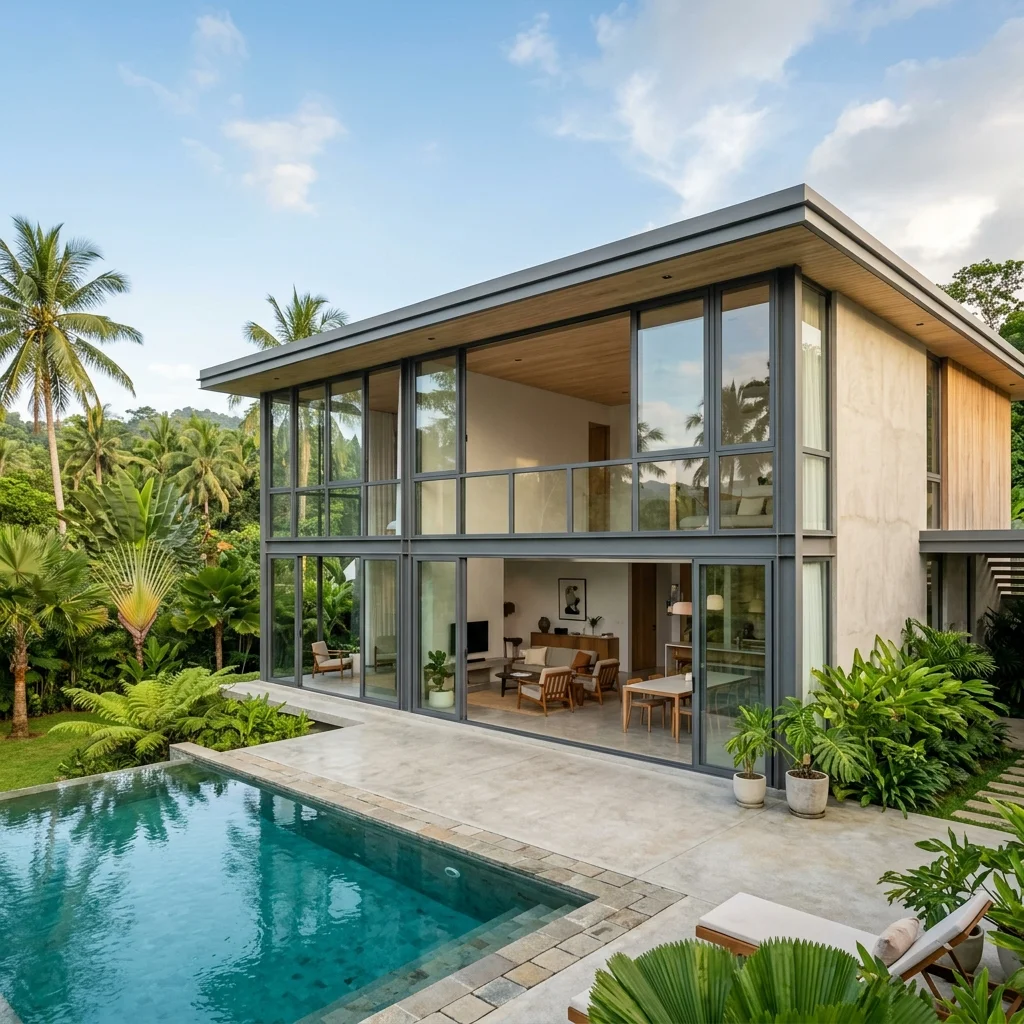
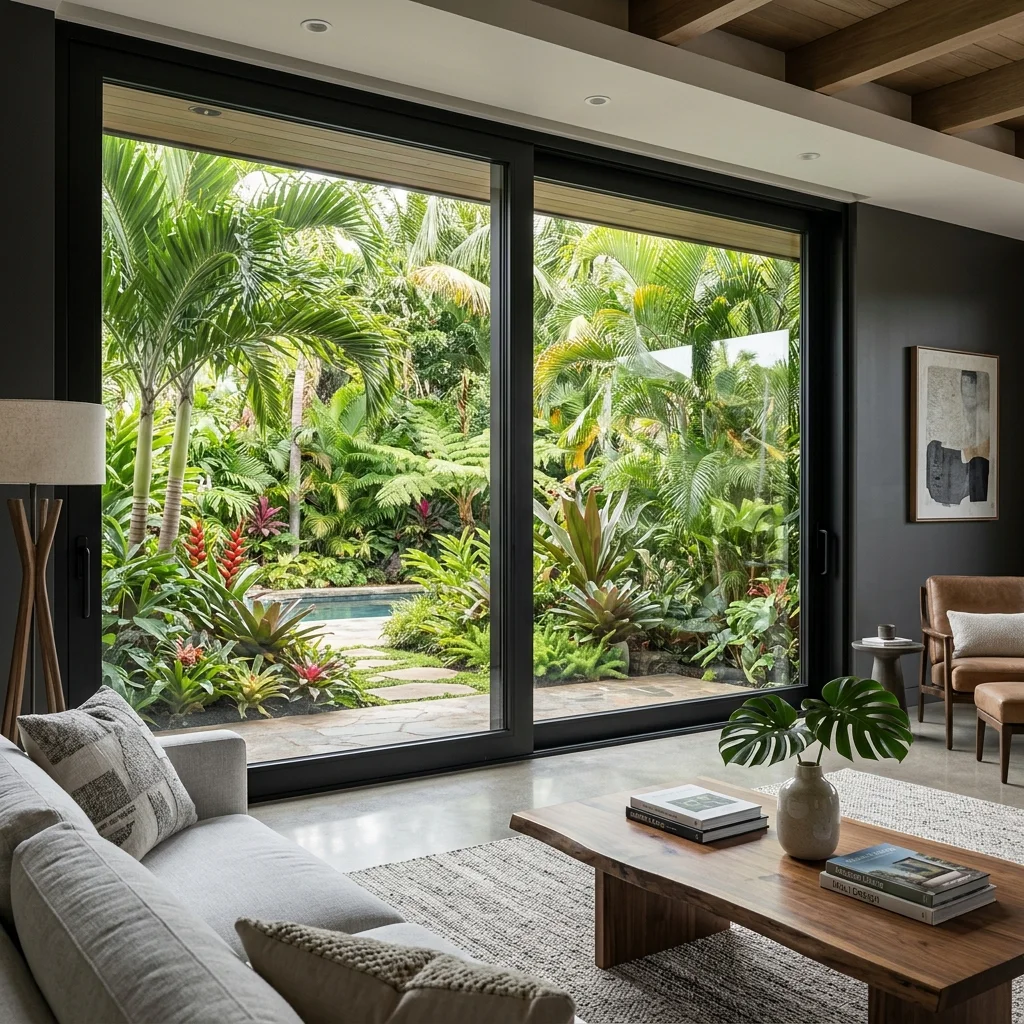
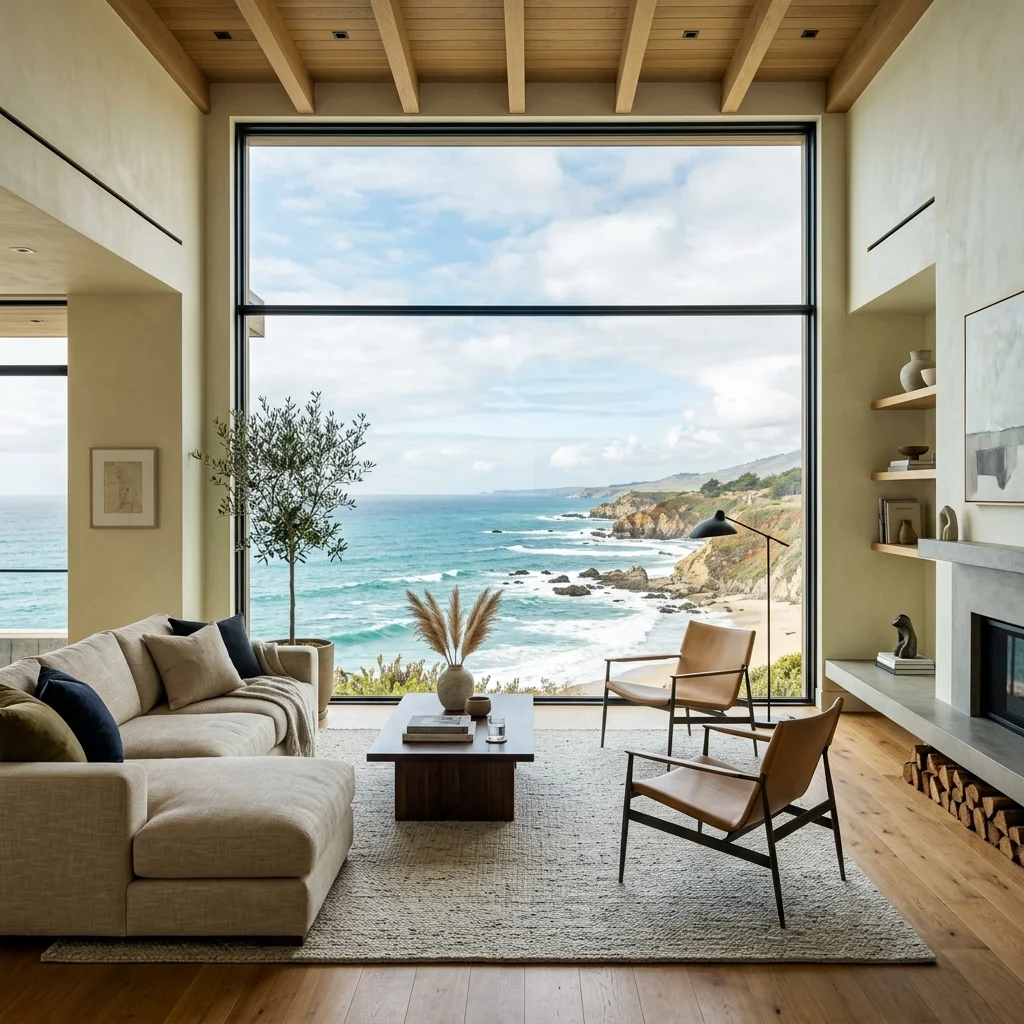
Recent casement window installations.
Key Features
Side-hinged casement windows that open fully for maximum ventilation and lock tight against typhoon weather.
Maximum Airflow
The sash swings fully clear — 100% of the opening width is available for cross-ventilation.
Multi-Point Security
Cam-lock or multi-point locking systems compress the full perimeter EPDM gasket uniformly.
Excellent Weather Seal
Compression EPDM rubber gaskets around the full frame perimeter create a tight seal.
Heavy-Gauge Profiles
Series 79 premium extrusions provide structural rigidity for 4-bar stays and multi-point locks.
Unobstructed Views
No center rail. A single casement sash gives you an uninterrupted view and a clean line.
Inward or Outward
Standard swings outward. Inward-opening casements available for limited exterior clearance.
Frequently Asked Questions
Common questions about casement windows in the Philippines.
What is the difference between a casement and an awning window?
A casement window is hinged on the side and swings outward horizontally — giving 100% opening width for maximum airflow. An awning window is hinged at the top and swings outward at the bottom, creating a rain-deflecting overhang. Casements provide more airflow; awning windows can stay open in rain.
Are casement windows typhoon-resistant?
Yes, when properly specified. We use Series 79 premium profiles with 1.4mm to 1.6mm gauge aluminum, 4-bar stainless steel friction stays rated for wind load, and compression EPDM rubber gaskets for a full perimeter weather seal. Multi-point locking systems add an additional level of wind resistance.
What if there is no clearance outside for the window to swing?
If there is no exterior clearance for the sash to swing outward, we can specify an inward-opening casement instead. Inward-opening casements are common in commercial and high-rise applications. The trade-off is that the open sash occupies interior space and is more vulnerable to rain if left open.
How much do casement windows cost?
A standard Series 38 casement window (600mm x 900mm) with 6mm tempered glass starts at approximately P3,500 to P5,500 installed. Series 79 premium profiles with thicker glass and multi-point locks are priced higher. We provide full itemized quotations based on exact dimensions and specifications.
Get Your Casement Window Quote
100% opening width for maximum airflow. Full itemized quote within 24 hours.
Get a Free QuoteExplore Related
All Window Types
Browse our full range of aluminum window systems.
CompareAwning Windows
Top-hinged alternative that stays open in light rain.
RelatedJalousie Windows
Maximum airflow through adjustable glass blades.
PricingWindow Price Guide
2025 aluminum window prices by series, gauge, and glass type.
MaterialsAluminum vs UPVC
Why we exclusively install heavy-gauge aluminum in the Philippines.
ProcessHow Installation Works
Laser measurement, fabrication, and on-site fitting — step by step.
TalisayServing Talisay City
Casement and awning window installations for Talisay, Cebu homeowners.
RelatedSwing Screen Doors
Pair casement windows with matching aluminum swing screen doors for ventilation.