Typhoon Damaged Your Windows? Here's What to Do First
The storm passed. Your windows are broken, water is inside, and you're not sure what to do next. This guide walks you through every step — from the first 10 minutes to permanent replacement.
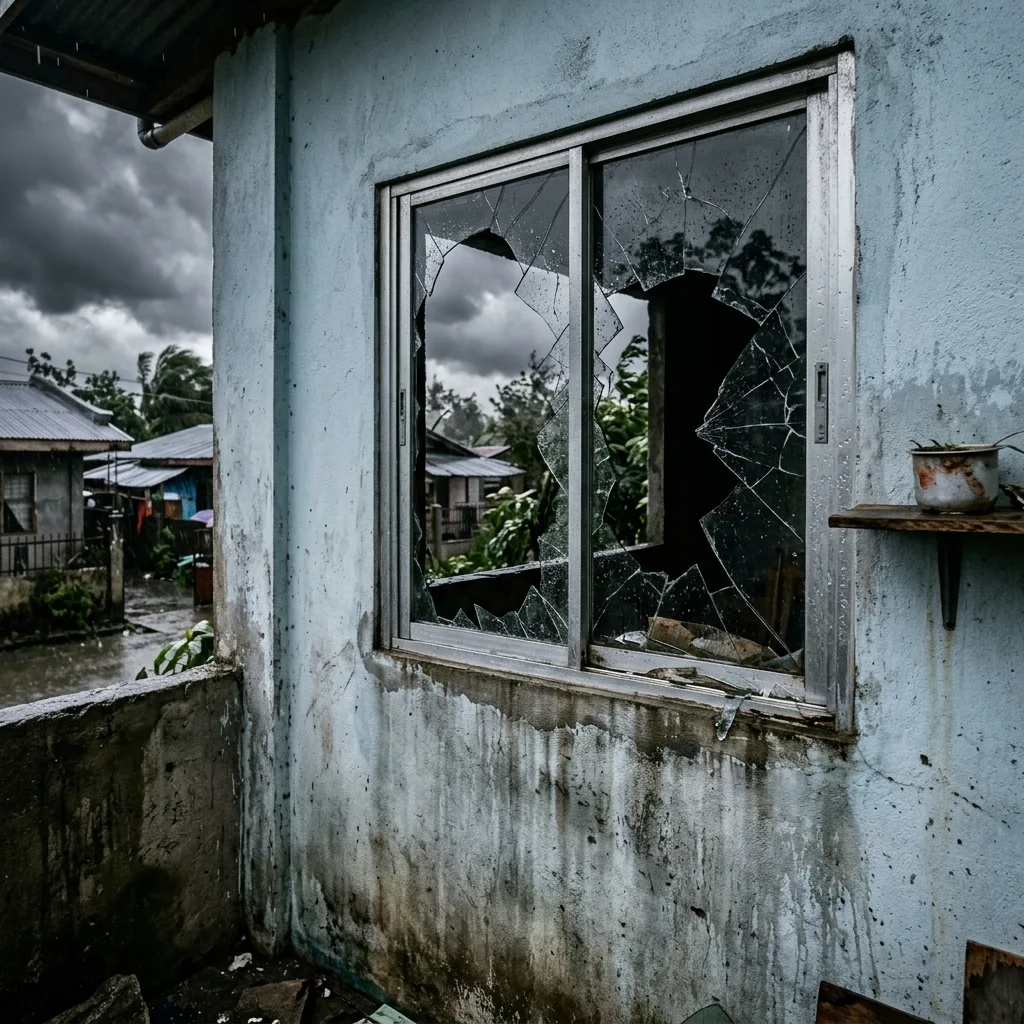
Every typhoon season, we receive hundreds of emergency calls from homeowners across Metro Manila, Cebu, and Calabarzon. The window is shattered. Rain is pouring in through the opening. Furniture is soaked. Children are frightened. The instinct is to rush in and start cleaning up — but that instinct can get you seriously injured. Here is the correct sequence of actions, based on our experience responding to thousands of post-typhoon window emergencies over the past decade.
The First 10 Minutes — Safety Before Everything
Do not enter the room barefoot. This is the single most common injury we see after typhoon window damage. Broken glass fragments — especially from annealed (non-tempered) glass — are razor-sharp, nearly invisible on wet floors, and embed deeply into bare feet. Put on thick-soled shoes or rubber boots before approaching the affected area.
Identify the glass type immediately. This determines your safety risk level:
Tempered glass breakage — you will see thousands of small, roughly cube-shaped granules scattered across the floor and windowsill. These pieces have blunt edges and are relatively safe to handle with gloves. Tempered breakage looks dramatic but is far less dangerous.
Annealed glass breakage — you will see large, jagged shards with edges sharp enough to cut through leather gloves. Some pieces may still be hanging in the frame, held in place by the glazing putty or sealant. Do not attempt to remove hanging shards yourself — a single falling piece can cause a laceration requiring stitches. Call a professional.
Keep children and pets out of the room. Close the door to the affected room. If the room has no door (open-plan living areas), use chairs and cushions to create a barrier that prevents access to the glass debris zone.
Check for electrical hazards. If rain water has entered the room through the broken window, check whether any electrical outlets, power strips, or appliance cords are submerged or wet. If so, switch off the circuit breaker for that room before touching anything. Standing water plus live electrical connections is lethal.
Hours 1 to 24 — Temporary Protection
Once the area is safe to work in, your priority shifts to preventing further water damage to the room interior. Every hour that rain continues entering through the broken opening causes additional damage to walls, floors, furniture, and — most critically — the electrical wiring hidden inside the walls.
Best option: Plywood board — cut a sheet of marine plywood to cover the entire window opening. Secure it to the concrete wall with masonry screws or concrete nails. This provides a solid, weather-resistant barrier that will hold even if another storm follows.
Good option: Heavy-duty plastic sheeting — if plywood is not available immediately after the storm (hardware stores are often closed or sold out), use thick construction plastic sheeting or a cut-open heavy-duty garbage bag. Tape all four edges to the wall using wide packaging tape or duct tape. The tape will fail within 24 to 48 hours in rain, so this is a temporary solution until you can get plywood.
Emergency option: Cardboard + plastic bag — layer corrugated cardboard behind a plastic sheet. The cardboard provides structural stiffness while the plastic keeps water out. Replace every 12 to 24 hours as the cardboard softens from humidity.
Critical step most people forget: Remove all standing water from the windowsill, floor, and any pooled areas immediately. Use towels, a mop, or a wet/dry vacuum. Standing water that sits for more than 24 to 48 hours in Philippine humidity creates mold growth on walls, wood trim, and carpet that is expensive and difficult to remediate.
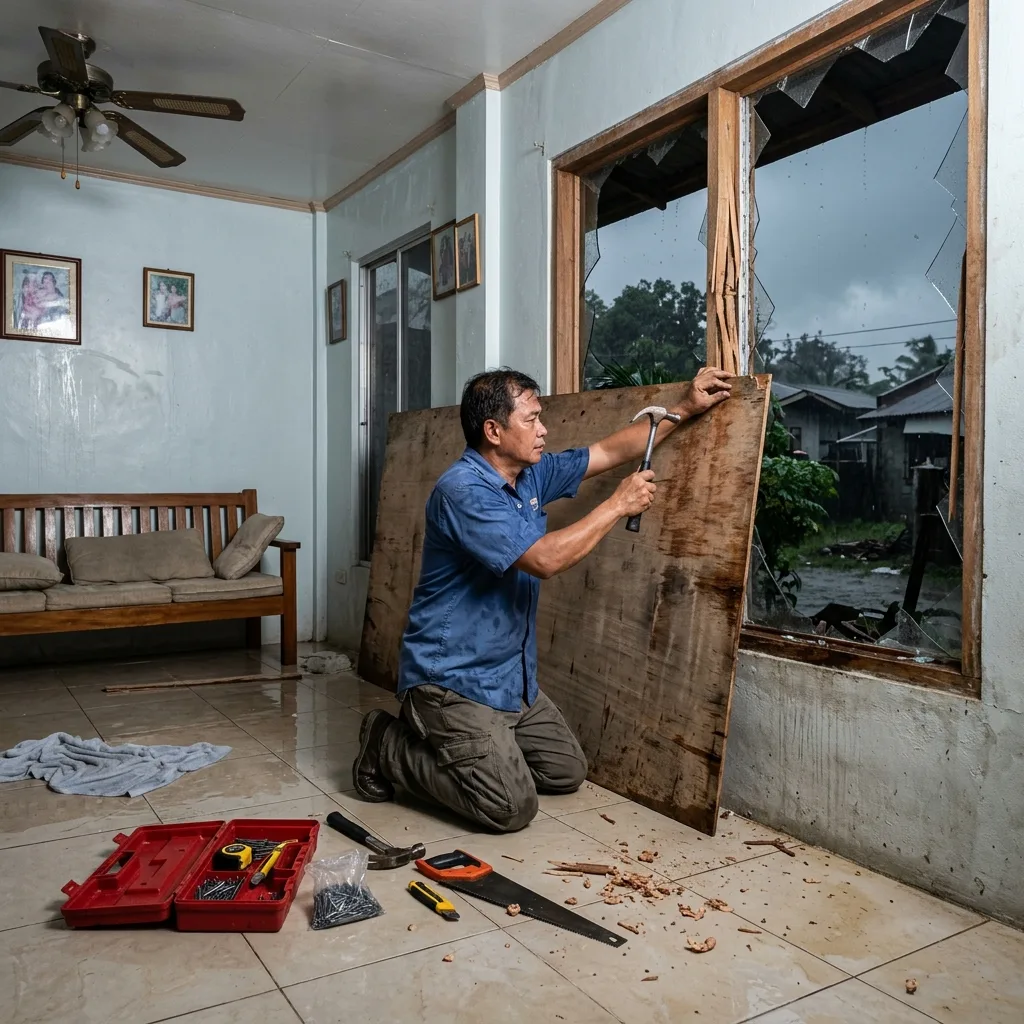
Days 1 to 3 — Documentation and Insurance
Photograph everything before you clean up. This is critical for insurance claims. Take photos of:
The broken window — close-up shots showing the damage pattern (shattered glass, bent frame, displaced anchors)
The room interior — water damage to walls, floors, furniture, electronics, and personal belongings
The window from outside — showing the extent of frame displacement and any structural damage to the surrounding wall
Wide-angle context shots — showing the entire affected room and the relationship of the damage to the building
Date-stamped photos — ensure your phone's date/time stamp is enabled. Insurance adjusters verify the timing of damage claims.
Contact your insurance provider within 48 to 72 hours. Most Philippine homeowner insurance policies cover typhoon damage to windows and glass under the "Acts of God" or "natural catastrophe" provisions. File the claim as soon as possible — insurance companies process claims in the order received, and after a major typhoon, the queue can be weeks long.
| Document | Why You Need It |
|---|---|
| Photos of damage (timestamped) | Primary evidence for insurance claim |
| PAGASA typhoon bulletin | Official record linking damage to specific storm event |
| Purchase receipt of original windows | Establishes replacement value for claim |
| Contractor repair estimate | Insurance requires professional cost assessment |
| Barangay incident report | Some insurers require local government documentation |
Days 3 to 7 — Professional Assessment
Have a professional window installer assess the damage. This assessment determines whether you need glass-only replacement or full frame replacement — two very different scopes with very different costs and timelines:
| Damage Type | What It Looks Like | Repair Scope | Typical Cost | Timeline |
|---|---|---|---|---|
| Glass only (frame intact) | Cracked or shattered glass, frame still plumb and firmly anchored | Replace glass panels | ₱2,000 – ₱5,000 per panel | 3 – 7 days |
| Glass + hardware | Broken glass plus bent rollers, broken locks, or damaged handles | Replace glass + hardware | ₱3,500 – ₱7,000 per window | 5 – 10 days |
| Frame damage | Bent, twisted, or displaced frame, wall anchors pulled out | Full frame + glass replacement | ₱8,000 – ₱18,000 per window | 2 – 4 weeks |
| Structural wall damage | Cracked concrete around opening, damaged lintel | Masonry repair + new frame + glass | ₱15,000 – ₱30,000 per window | 3 – 6 weeks |
Week 2 to 4 — Permanent Replacement
Expect delays after major typhoons. This is the reality that catches most homeowners off guard. After a Signal No. 4 or 5 typhoon, the demand for replacement glass and aluminum spikes dramatically while supply chains are disrupted. Glass factories may be damaged. Aluminum suppliers may have flooded warehouses. Transport routes may be blocked.
Having an existing relationship with a window installer before typhoon season is the single most important thing you can do. Our existing clients go to the front of the queue after a storm — we prioritize repeat clients and homes with elderly residents, infants, or medical equipment that requires climate control. First-time callers after a major typhoon may wait 3 to 6 weeks for materials and scheduling.
Upgrade — Don't Rebuild the Same Way
This is the most important advice in this entire article: if your windows failed in this typhoon, rebuilding with the same specification will produce the same failure in the next typhoon. The Philippines averages 20 typhoons per year. Your windows will face this test again — probably within the next 12 months.
Upgrade the aluminum series — if your failed windows were Series 38 or Series 798, upgrade to Series 900 or Series 1200. The heavier gauge aluminum resists wind pressure without flexing, and the deeper track channels prevent water from climbing over the glass face.
Upgrade to tempered glass — if your original windows used annealed glass, switch to tempered. Tempered glass is 4 to 5 times stronger, and when it does break, the small granules are far safer than the razor-sharp shards of annealed glass.
Upgrade the sealant — insist on neutral-cure structural silicone (Dow Corning 791 or equivalent) for the frame-to-wall joint. Cheap acrylic sealant cracks and peels within 1 to 2 years in Philippine UV and weather cycling. Structural silicone maintains its bond for 15 to 25 years.
Add anti-lift blocks — for sliding windows, anti-lift blocks prevent the panel from being pushed inward or lifted out of the track by wind pressure. This is a ₱200 to ₱500 addition per window that prevents one of the most common typhoon failure modes.
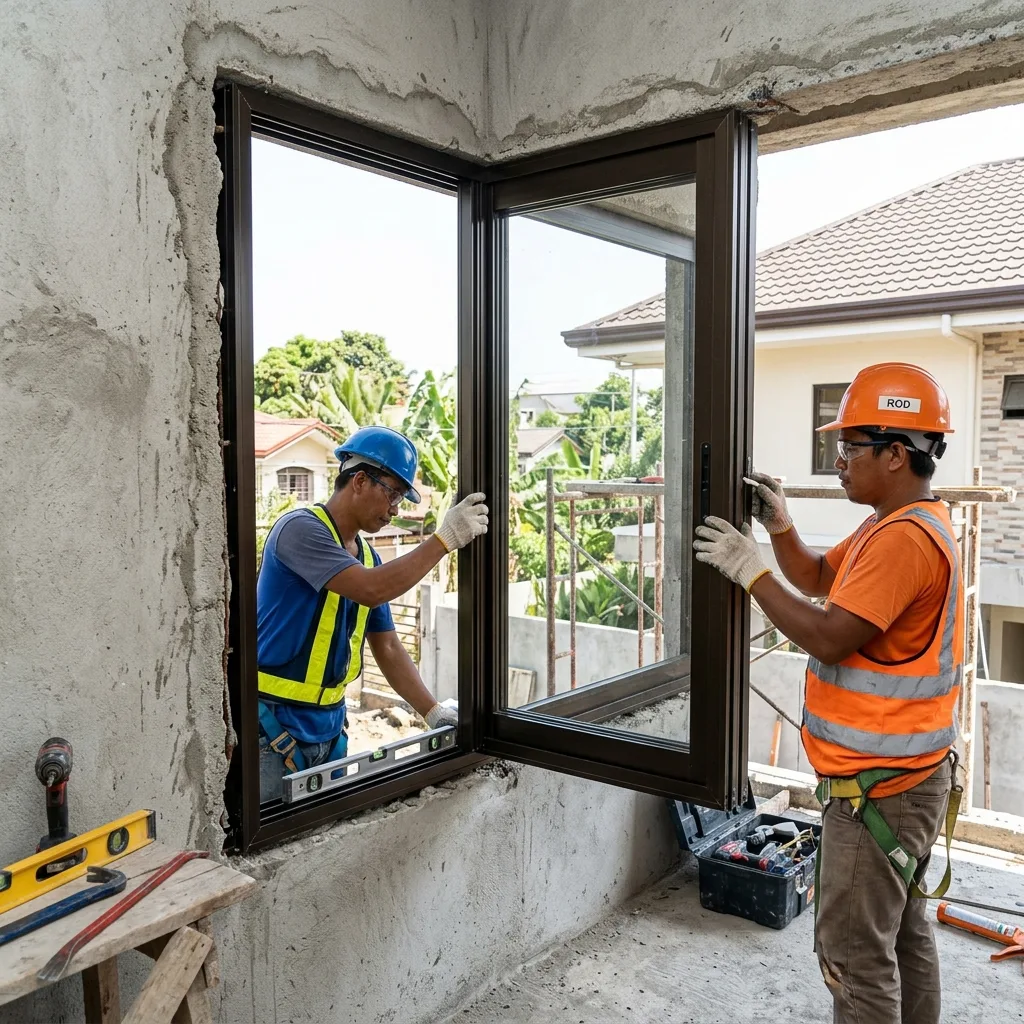
Typhoon-Season Preparation Checklist
The best time to prepare for typhoon window damage is before the season starts (June through November). Here is what to do now:
| Action | When | Cost |
|---|---|---|
| Inspect all window sealant joints for cracking or gaps | May (before season) | Free (DIY inspection) |
| Re-seal any compromised frame-to-wall joints | May – June | ₱500 – ₱1,500/window |
| Replace worn weatherstripping on sliding windows | May – June | ₱200 – ₱500/window |
| Test all window locks for secure engagement | May | Free (DIY) |
| Stock plywood sheets for emergency boarding | May | ₱300 – ₱600/sheet |
| Establish relationship with a window installer | Anytime before a storm | Free (contact us) |
| Review home insurance coverage for typhoon damage | Policy renewal | Varies |
Our Emergency Response
After a typhoon, we activate our emergency response process. Existing clients receive priority scheduling for assessment visits within 24 to 48 hours after roads are passable. We carry emergency stock of common glass sizes and weatherstripping for immediate temporary repairs, and we coordinate directly with insurance adjusters to expedite claims documentation. If you are reading this before a typhoon, contact us now to establish your account — when the storm hits, you will be glad you did.
Need Emergency Window Repair?
Priority scheduling for existing clients. Free assessment and insurance documentation support.