Sliding Door vs Swing Door — Which Glass Door Is Right for Your Home?
One gives you space efficiency and wide panoramic views. The other gives you superior weather sealing and heavy-duty security. Here is the definitive engineering comparison so you can choose the right door for every opening in your Philippine home.
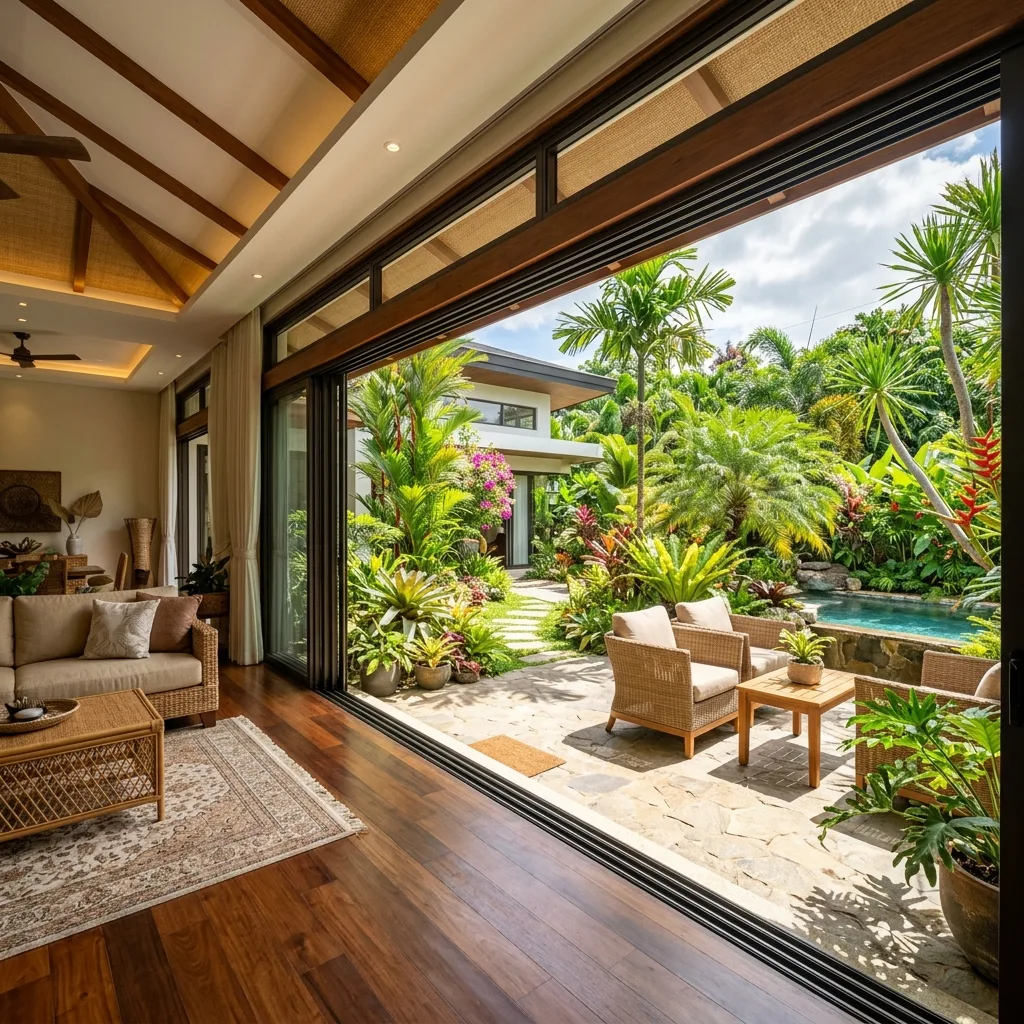
This is the second most common question our architects and installers answer after "how much does it cost?" — and the answer is not as simple as "sliding is cheaper" or "swing is better." Each door type excels at different specific structural tasks, and the wrong choice creates a daily frustration you will be forced to live with for 15 to 20 years. A swing door in a narrow high-rise condo balcony opening means you cannot fully open it when your outdoor furniture is in place. A sliding door as your main front entry means you are living with inferior physical security and compromised weather sealing every time typhoon season hits. Here is the complete engineering comparison so you make the correct choice the first time.
The Complete Side-by-Side Comparison
Before diving into specific rooms, let us look at the fundamental mechanical differences between how these two systems operate, seal, and perform over time.
| Performance Factor | Sliding Glass Door | Swing (Hinged) Glass Door | Clear Winner |
|---|---|---|---|
| Floor space required | Zero — panels move parallel | Full arc clearance (= door width) | 🏆 Sliding |
| Maximum clear opening | 50% (2-panel) to 75% (4-panel) | 100% (full opening width) | 🏆 Swing |
| Weather/Typhoon sealing | Moderate (wool-pile brush strips) | Excellent (compression gaskets) | 🏆 Swing |
| Physical Security | Good (flush-bolt + auxiliary lock) | Excellent (multi-point lock, 3-5 points) | 🏆 Swing |
| Acoustic Noise reduction | STC 26-30 | STC 32-40 | 🏆 Swing |
| Air Conditioning efficiency | Moderate (air leaks at meeting stiles) | Very good (tight compression seal) | 🏆 Swing |
| Wind resistance (closed) | Excellent (panel recessed in track) | Excellent (locked rigidly into frame) | Tie |
| Wind safety (when open) | Safe — panel cannot catch wind | Dangerous — can catch violent wind gusts | 🏆 Sliding |
| View quality (aesthetics) | Wide panoramic glass panels | Limited by vertical frame stiles | 🏆 Sliding |
| Daily ease of operation | One finger, light glide on rollers | Handle pull, moderate effort | 🏆 Sliding |
| Wheelchair / elderly access | Easy — flush threshold option | Harder — threshold step, door weight | 🏆 Sliding |
| Maintenance frequency | Higher (rollers, track cleaning) | Lower (hinges, occasional adjustment) | 🏆 Swing |
| Lifespan before major service | 5-8 years (roller replacement) | 10-15 years (hinge adjustment) | 🏆 Swing |
Quick summary of the physics: Swing doors win on 7 of 13 factors — primarily the factors related to sealing the environment out (water, wind, noise, intruders, and maintenance). Sliding doors win on the factors related to lifestyle and aesthetics — space efficiency, panoramic views, wind safety when open for ventilation, and daily ease of operation. The right choice depends entirely on which factors matter most for a specific opening in your house.
Where Each Type Excels — A Room-by-Room Guide
Do not use the same door type for every room in your house. Here is what architectural best practices dictate for Philippine residential construction:
| House Location | Best Architectural Choice | The Engineering Reason Why |
|---|---|---|
| Living room → garden/patio | Sliding (2 or 4-panel system) | Provides maximum view, requires zero floor clearance for furniture, easy indoor-outdoor flow. |
| Living room → balcony (condo) | Sliding | Balconies are often too narrow for a swing arc; a swinging door would hit the railing or chairs. |
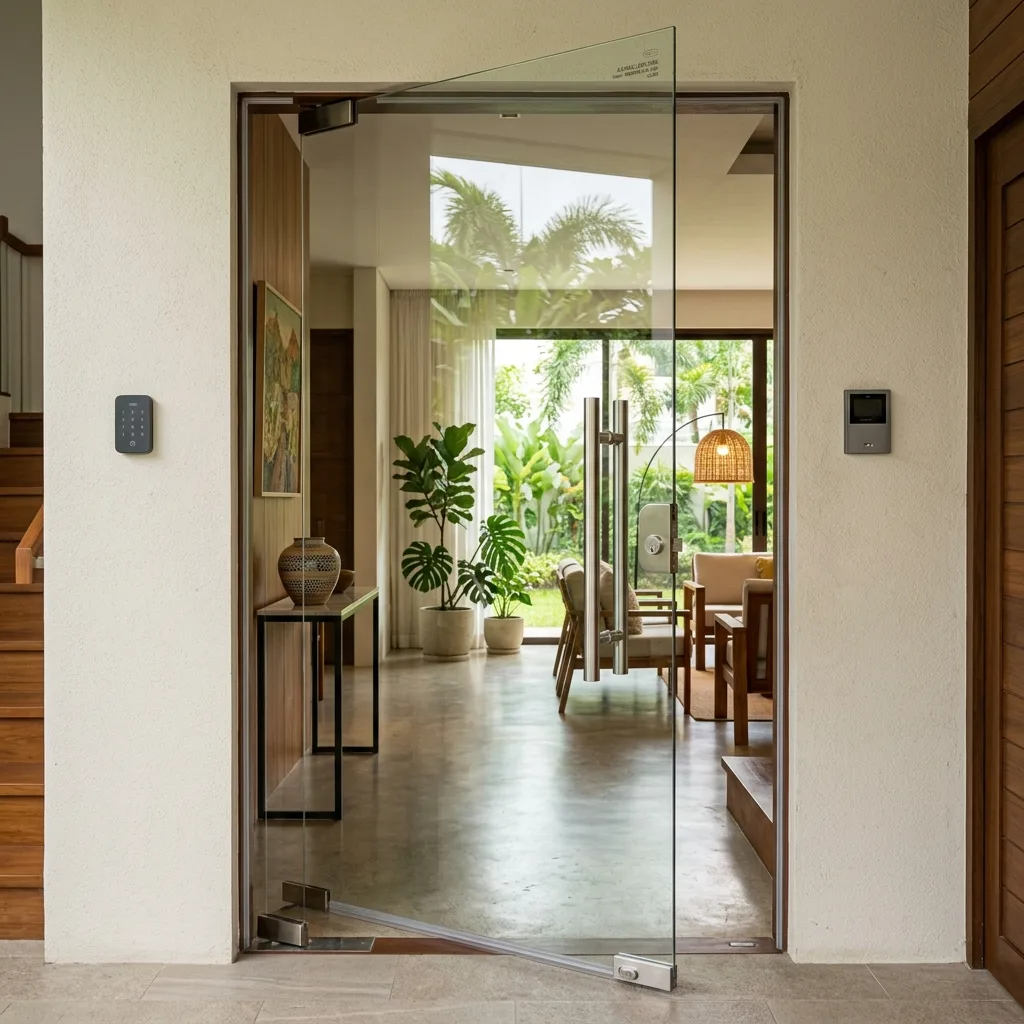
| Main front entry door | Swing (single or double leaf) | Superior security with multi-point locking mechanisms, significantly better weather seal against blowing rain. |
| Bedroom entry | Swing | Maximum privacy, superior noise isolation for sleeping, and fire code egress requirements. |
| Bathroom enclosure | Swing (inward) or Sliding | Swing is best for water containment; sliding is necessary if the bathroom layout is very small. |
| Kitchen → dirty kitchen/service | Sliding | Hands are often full of plates or groceries — a sliding door opens smoothly with one elbow or finger. |
| Dining room → outdoor terrace | Bi-fold or wide Sliding | Entertainment flow — allows for a massive wide opening for parties and family gatherings. |
| Home office / Study room | Swing | Maximum acoustic isolation (STC rating) for video calls, deep work, and privacy. |
| Commercial storefront | Swing (frameless) | Building code strictly requires outward-swinging doors for emergency fire egress. |
Weather Sealing — The Critical Typhoon Differentiator
In the Philippines, weather sealing is not a minor luxury consideration — it determines whether your living room floods during a Category 3 typhoon or a severe monsoon. Here is the mechanical difference between how the two systems keep water out:
Sliding doors rely on wool-pile brush strips at the panel meeting points (where the two sliding glass panes overlap). These are thin brushes made of synthetic fiber that physically fill the gap between the two moving panels. When brand new, they provide moderate air and water resistance. However, after 2 to 3 years of daily use, the friction causes the fibers to compress permanently, losing 40 to 60 percent of their sealing effectiveness. During typhoons with wind-driven rain (horizontal rain hitting the glass at 80+ km/h), aging brush strips will allow significant water penetration at the meeting stile, and the bottom track can overflow if the weep holes cannot drain the deluge fast enough.
Swing doors rely on compression gaskets — thick rubber or EPDM seals that physically compress when the door is closed and locked. High-quality swing doors utilize multi-point locks (featuring 3, 5, or even 7 individual locking points around the frame perimeter). When you lift the handle to lock the door, all locking points engage simultaneously, physically pulling the door panel tight against the rubber gaskets on all four edges. This compression seal maintains its effectiveness for 10 to 15 years and provides dramatically superior water and air resistance during extreme weather events. If you face the ocean or are exposed to direct monsoon winds, a swing door is the only fully waterproof choice.
Cost Comparison (2026 Prices)
Many homeowners assume sliding doors are cheaper because they are so common, but this is a misconception when dealing with architectural-grade materials. Sliding doors require more complex hardware and more aluminum framing per square meter than a standard swing door.
| Door Configuration & Size | Sliding System (Installed) | Swing/Hinged System (Installed) |
|---|---|---|
| Standard single opening (1.8m × 2.1m, framed) | ₱25,000 – ₱40,000 | ₱20,000 – ₱35,000 |
| Wide double opening (2.4m × 2.1m, framed) | ₱35,000 – ₱55,000 | ₱30,000 – ₱50,000 (double leaf french doors) |
| Extra wide terrace opening (3.0m+ × 2.4m) | ₱45,000 – ₱70,000 | ₱55,000 – ₱85,000 (bi-fold mechanism required) |
| Frameless glass door (standard opening) | ₱55,000 – ₱85,000 (overhead track) | ₱40,000 – ₱65,000 (patch fittings) |
| Heavy-duty typhoon-rated commercial series | ₱65,000 – ₱100,000 | ₱50,000 – ₱80,000 |
Note: Prices include premium aluminum framing (Series 900 or equivalent), 8-10mm tempered safety glass, stainless steel hardware, professional installation, silicone sealant, and site cleanup. Frameless doors utilize 10-12mm tempered glass with heavy-duty stainless steel patch fittings and hydraulic floor springs.
Why sliding costs more for standard openings: Sliding doors require significantly more aluminum raw material (two fully framed, overlapping panels instead of one), more complex track hardware (including stainless steel tandem rollers, anti-lift security blocks, and extruded track channels), and more glass surface area (two full panels versus one). The cost advantage of swing doors only inverts at extra-wide openings where bi-fold systems become necessary — because bi-fold hardware (which includes multiple structural hinges, top-tracking carriages, and floor alignment pins) is far more expensive than simple two-panel sliding tracks.
The Third Option: Bi-Fold Glass Doors
For openings wider than 3 meters (such as a living room opening up to a swimming pool terrace) where you want maximum clear opening space but refuse to compromise on weather sealing, bi-fold (folding) glass doors offer the ultimate architectural solution. They combine the best aspects of both systems:
Clear Opening — 90 to 100 percent of the total width is opened (the panels fold and stack neatly to one side).
Weather Sealing — Features compression gaskets at every single panel meeting point (approaching the exceptional sealing quality of a standard swing door).
Space Efficiency — The folded panels stack in a compact column perpendicular to the wall, requiring minimal wall space compared to sliding doors that need a pocket.
Aesthetic Impact — Creates a dramatic, seamless open-air living experience when fully opened — the physical wall entirely disappears.
Investment Cost — Premium pricing: ₱55,000 to ₱120,000 depending on the total width, glass thickness, and hardware specification.

Our Final Recommendation for Philippine Homes
Most well-designed Philippine homes benefit from utilizing both door types strategically placed in their correct locations. Do not default to putting sliding doors everywhere just to save space. We recommend the following approach:
Use Sliding Doors for garden access, patio transitions, high-rise balcony openings, and any location where panoramic views and space efficiency are the absolute priority. Specify heavy-duty Series 900 aluminum with stainless steel tandem rollers and anti-lift blocks to ensure they survive typhoon season.
Use Swing Doors for your main exterior entries, bedrooms, home offices, and any location where physical security, acoustic noise isolation, and heavy weather sealing are the priority. Specify multi-point locking systems (minimum 3 points) with EPDM compression gaskets.
Use Bi-fold Doors for wide entertainment openings (3 meters or wider) where you want the indoor-outdoor wall to completely disappear during family gatherings and parties — but you need the system to seal back up tight when the monsoon weather turns aggressive.
This blended combination optimizes both function and aesthetics — and it completely eliminates the daily frustrations that come from forcing one door type into an architectural role it was never designed to handle.
Need Help Choosing Your Glass Doors?
Free site visit, architectural design consultation, and detailed quotation with sliding, swing, and bi-fold options compared — all within 48 hours.