What Glass Thickness Do You Need for a Shower Enclosure?
8mm, 10mm, or 12mm? The answer is not about aesthetics — it is an engineering decision that determines whether your shower enclosure is safe, stable, and built to last.
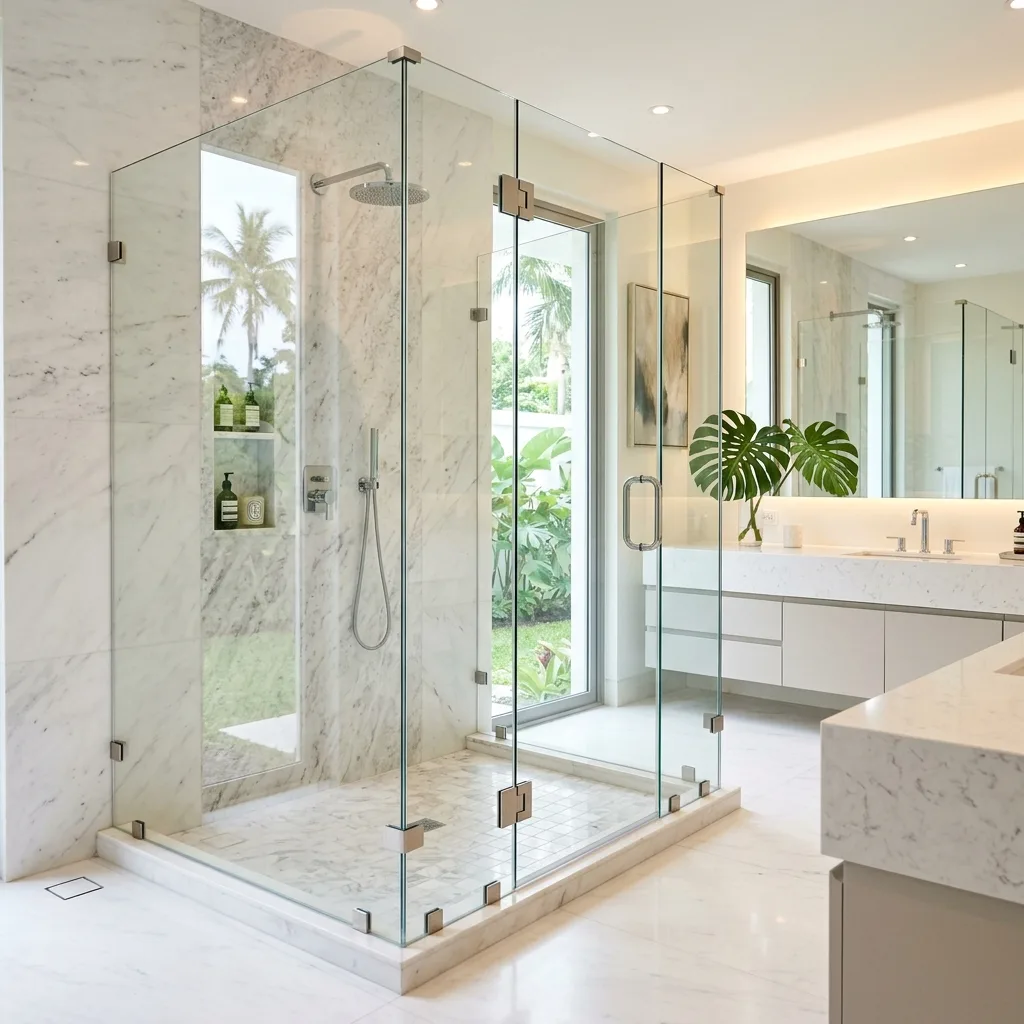
This is the single most asked question we receive about shower enclosures — and the answer most people get wrong. They pick 12mm because "thicker must be better," then end up with hinges that cannot support the weight and a door that sags within six months. Or they pick 8mm to save money, then wonder why their frameless panels flex visibly when the door closes. Glass thickness for shower enclosures is an engineering specification, not a budget decision. The right thickness depends on your enclosure type, panel dimensions, hardware capability, and mounting method. Here is how to get it right.
The Quick Decision Table
Find your enclosure type below — the recommended thickness is on the right:
| Enclosure Type | Thickness | Weight/SQM | Cost/SQM (Installed) |
|---|---|---|---|
| Framed sliding door on track | 8mm | 20 kg | ₱2,800 – ₱3,800 |
| Framed hinged door (aluminum frame) | 8mm | 20 kg | ₱3,000 – ₱4,200 |
| Frameless fixed panel (under 1.8m height) | 10mm | 25 kg | ₱3,500 – ₱5,000 |
| Frameless hinged door (standard) | 10mm | 25 kg | ₱3,500 – ₱5,000 |
| Frameless L-shaped enclosure | 10mm | 25 kg | ₱3,500 – ₱5,000 |
| Frameless panels over 2.1m height | 12mm | 30 kg | ₱4,500 – ₱6,500 |
| Frameless wide door (over 800mm) | 12mm | 30 kg | ₱4,500 – ₱6,500 |
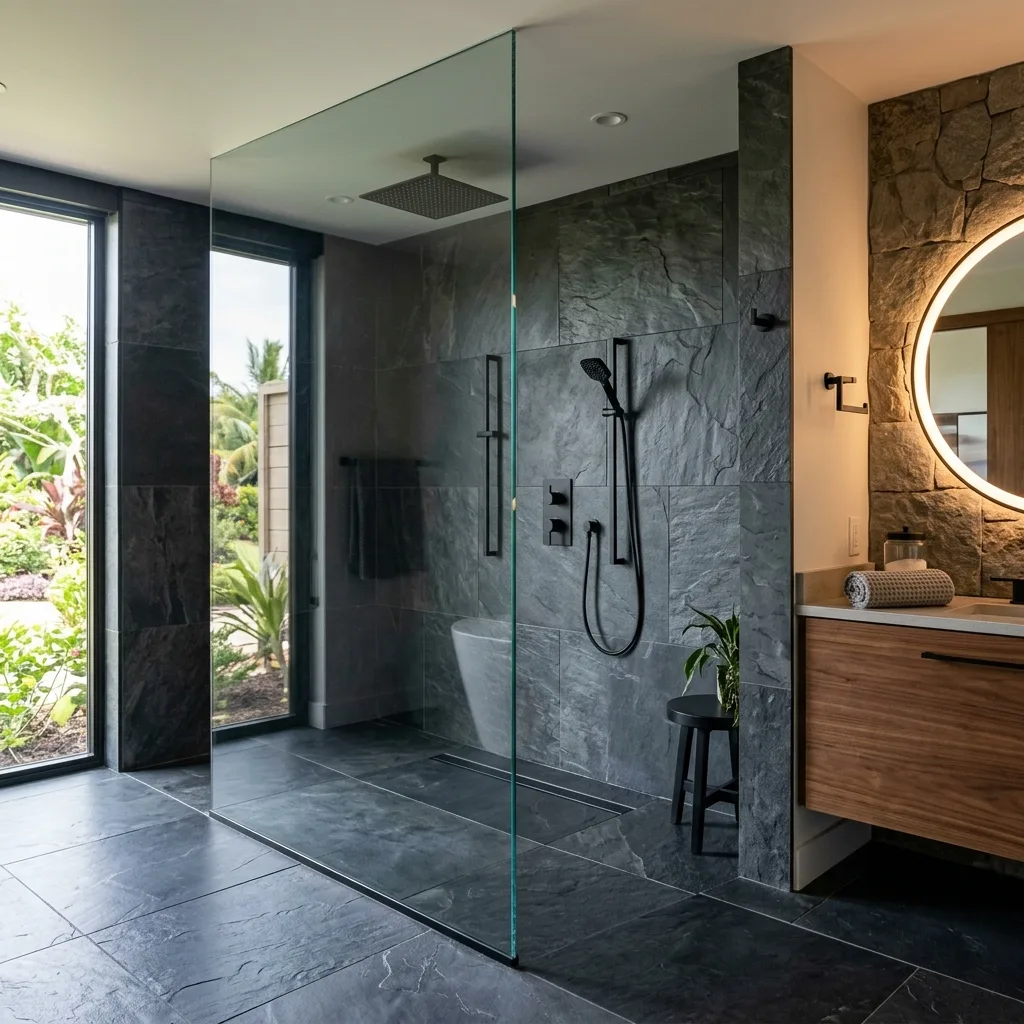
| Walk-in open panel (no door) | 12mm | 30 kg | ₱4,500 – ₱6,500 |
| Hotel / commercial bathroom | 12mm | 30 kg | ₱5,000 – ₱7,000 |
8mm — When the Frame Does the Work
8mm tempered glass is the entry-level thickness for shower enclosures. It is appropriate only when the glass is supported by a frame — meaning the aluminum or stainless steel frame provides the structural rigidity, and the glass only needs to resist direct impact, not support its own weight or resist flexing.
Framed sliding doors — the overhead track carries the panel weight. The glass hangs from rollers and slides laterally. The frame provides rigidity. 8mm is structurally adequate and keeps the sliding mechanism smooth.
Framed hinged doors — the aluminum frame around all four edges provides rigidity. The hinges carry the frame weight, not the glass directly. 8mm is sufficient.
Small fixed panels (under 1.5 sqm) — panels that are short and narrow enough that 8mm tempered provides adequate rigidity without visible flex.
8mm is the absolute minimum. We do not install anything thinner than 8mm for shower applications. 6mm and 5mm glass — even tempered — does not provide adequate impact resistance for a wet, slippery environment where a person could slip and fall against the glass at full body weight.
10mm — Our Standard for 80% of Projects
We recommend 10mm tempered glass for the vast majority of residential shower enclosures in the Philippines. It is the sweet spot — thick enough for frameless structural integrity, light enough for standard hardware, and priced in the middle of the range. Here is why 10mm works for most bathrooms:
| Factor | 8mm | 10mm | 12mm |
|---|---|---|---|
| Frameless capable | ❌ Needs frame | ✅ Up to 2.1m height | ✅ Any height |
| Panel flex (visible) | Noticeable | Minimal | None |
| Weight per panel (900×2100mm) | 38 kg | 47 kg | 57 kg |
| Standard hinge compatible | ✅ | ✅ | ❌ Needs heavy-duty |
| One-person installable | ✅ | ✅ (careful) | ❌ Needs two people |
| Impact resistance (vs annealed) | 4x stronger | 4x stronger | 4x stronger |
| Cost per SQM (installed) | ₱2,800 – ₱3,800 | ₱3,500 – ₱5,000 | ₱4,500 – ₱6,500 |
A typical 10mm frameless shower enclosure for a standard Philippine bathroom — either a 900mm × 900mm L-shaped corner enclosure or a 1200mm straight panel with a hinged door — costs between ₱18,000 and ₱28,000 fully installed, including all hardware, silicone sealing, and waterproofing at the base.
12mm — When Size and Safety Demand It
12mm tempered glass is the premium specification. It is not "better" than 10mm in every situation — it is specifically required when panel dimensions, design type, or usage intensity exceed what 10mm can structurally handle:
Panels exceeding 2.1 meters in height — taller panels experience more leverage force at the mounting points. At 2.4m height, a 10mm panel develops visible flex when the door swings — 12mm eliminates this.
Wide door panels over 800mm — a wider door creates greater torque on the hinges. 12mm glass distributes this force better and resists hinge-point stress cracking.
Walk-in designs with no door — open walk-in showers use a single large glass panel as a splash guard with no supporting frame or adjacent panels. The glass is fully self-supporting, requiring maximum rigidity.
Hotel and commercial bathrooms — higher traffic intensity, larger occupants, and stricter safety liability requirements justify the additional impact resistance and structural margin.
The weight trade-off is real. A single 12mm panel measuring 900mm × 2100mm weighs approximately 57 kg — 10 kg more than the same panel in 10mm. This weight difference has three consequences: you need heavy-duty hinges rated for the load (standard hinges fail within months), you need two installers to position the panel safely (one person cannot handle 57 kg of glass on a wet bathroom floor), and the mounting wall must be structurally sound (lightweight partition walls may need reinforcement).
Tempered Glass Is Non-Negotiable
Every panel in your shower enclosure — door panel, fixed panel, return panel — must be tempered. No exceptions. No cost-saving substitutions. Here is what happens when each type breaks:
| Factor | Tempered Glass | Annealed (Regular) Glass |
|---|---|---|
| Breakage pattern | Thousands of small, blunt granules (5-10mm) | Large, razor-sharp shards (30-300mm) |
| Laceration risk | Low — granules have rounded edges | Extreme — shards cause deep cuts requiring stitches |
| Impact strength | 4-5x stronger than annealed | Baseline — breaks from dropped shampoo bottles |
| Thermal stress resistance | Handles hot water + cold air cycling | Can develop stress cracks from daily thermal cycling |
| Cost | ₱1,200 – ₱1,800/sqm (6mm) | ₱600 – ₱900/sqm (6mm) |
| Building code compliant | ✅ Yes | ❌ No — prohibited for shower use |
In a shower — where you are wet, barefoot, soapy, and enclosed in a small space with no room to dodge — annealed glass breakage is a medical emergency. We have seen the injuries. They are preventable. Tempered glass is the difference between a cleanup and an ambulance.
How to verify your existing shower glass is tempered: Look in all four corners of each glass panel for a small etched stamp — usually the manufacturer's logo and the word "TEMPERED" or the letter "T". This stamp is applied before the tempering process and is permanent. If your existing shower glass has no stamp, it is likely annealed and should be replaced immediately. Do not wait for it to break.
Hardware Must Match — The Detail Most Installers Get Wrong
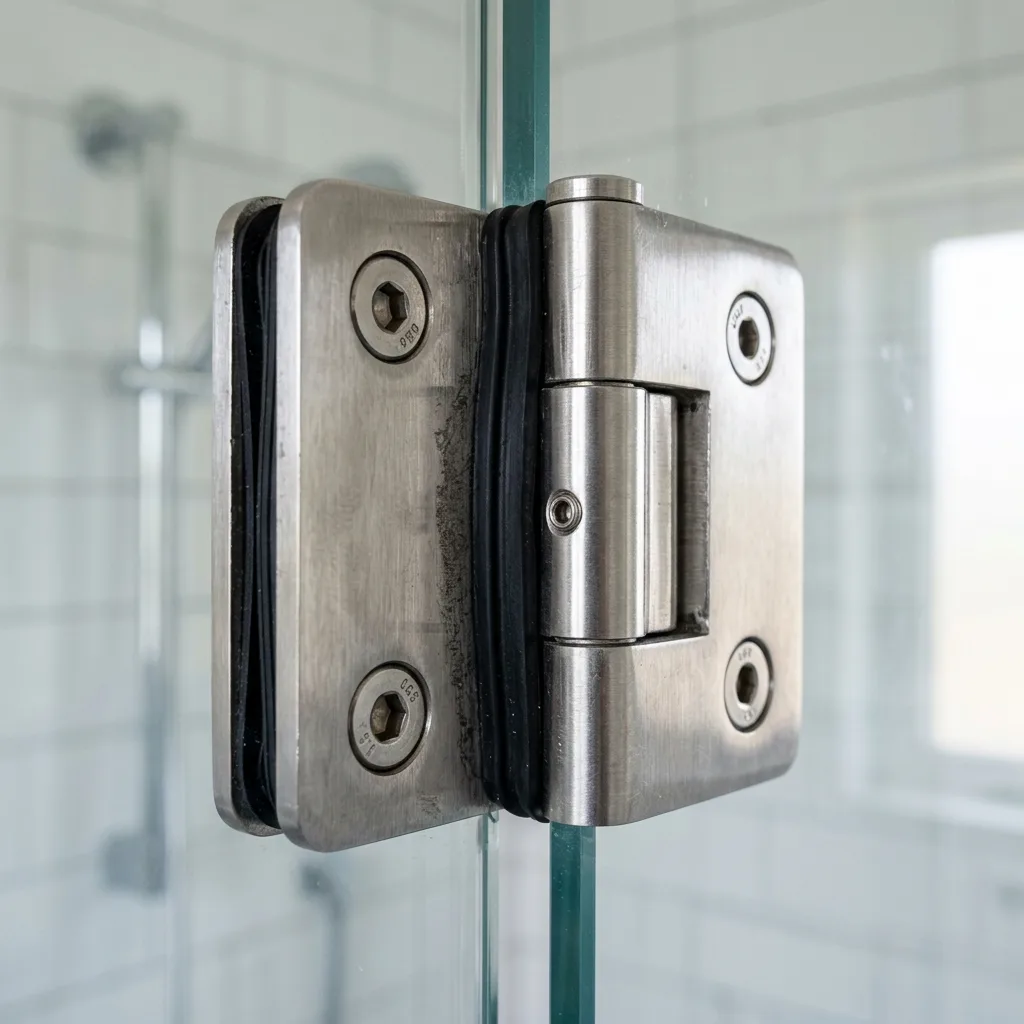
Shower enclosure hardware is not universal. Every component — hinges, wall clamps, glass-to-glass clamps, magnetic seals, and bottom sweep seals — is manufactured for a specific glass thickness. Mismatching any of these causes progressive failure:
| Hardware | What Goes Wrong With Mismatch | Failure Timeline |
|---|---|---|
| Hinges rated for 8mm on 10mm glass | Hinge pin cannot support the extra weight — door sags, drags on threshold | 2-4 months |
| Standard hinges on 12mm glass | Catastrophic hinge failure — door drops suddenly | 1-3 months |
| 10mm clamps on 8mm glass | 1mm gap each side — glass vibrates, screws loosen, clamp fails | 3-6 months |
| 8mm magnetic seal on 10mm glass | Seal cannot close over thicker edge — water leaks at meeting point | Immediate |
| Wrong-size bottom sweep | Gap under door — water flows onto bathroom floor every shower | Immediate |
The quotation test: Check your quotation for hardware specifications. Every hinge, clamp, and seal should specify "for 10mm glass" (or whichever thickness you are installing). If the quote just says "glass clamps" or "hinges" without a thickness specification, the installer is likely using whatever hardware is cheapest — not what is correct for your glass.
Enclosure Configurations and Costs (2026)
Here are the most common shower enclosure configurations we install in Philippine bathrooms, with total installed prices including 10mm tempered glass, stainless steel hardware, silicone sealing, and waterproofing:
| Configuration | Panels | Size Range | Total (10mm, Installed) |
|---|---|---|---|
| Straight panel (fixed, no door) | 1 fixed | 600-1000mm wide | ₱8,000 – ₱14,000 |
| Straight panel + hinged door | 1 fixed + 1 door | 1200-1500mm total | ₱18,000 – ₱28,000 |
| L-shaped corner (90°) | 2 fixed + 1 door | 900×900mm corner | ₱25,000 – ₱38,000 |
| U-shaped (3 sides) | 3 fixed + 1 door | 900×1200mm | ₱35,000 – ₱50,000 |
| Walk-in (single splash panel) | 1 fixed (large) | 1200-1500mm × 2100mm+ | ₱15,000 – ₱25,000 |
| Bathtub screen (pivot) | 1 pivot panel | 700-800mm wide | ₱12,000 – ₱18,000 |
The 6 Mistakes We See in Philippine Bathrooms
Mistake 1: Using 6mm glass — Never appropriate for shower enclosures regardless of framing. 6mm tempered glass does not provide adequate impact resistance for a wet environment. A 70 kg adult slipping and falling against 6mm glass can break it.
Mistake 2: Mixing tempered and annealed panels — Some contractors use tempered for the door (because you touch it) but annealed for the fixed panel (to save ₱800-₱1,200). Both panels must be tempered. A person can fall against any panel, not just the door.
Mistake 3: 12mm glass on standard hinges — Standard brass hinges are rated for 40-50 kg. A 12mm door panel weighs 57 kg. The hinges deform within weeks, the door sags, and the glass eventually cracks at the hinge point from stress concentration.
Mistake 4: No silicone back-bedding behind clamps — Wall clamps should have structural silicone applied behind the glass before the clamp screw is tightened. Without this back-bedding, the glass is held only by clamp friction — which loosens over time from thermal cycling and vibration.
Mistake 5: No waterproofing at the base — The junction between the glass panel base and the bathroom floor is the most leak-prone point. A proper installation includes a silicone bead on both sides, a raised threshold or channel, and slope toward the drain.
Mistake 6: Cutting tempered glass after tempering — Tempered glass cannot be cut, drilled, or modified after the tempering process. Any attempt shatters the entire panel. All cutouts, holes, and edge work must be completed before tempering. If your installer says they will "trim it to fit on site," they are either using annealed glass or do not understand their own product.
Our Recommendation
For most Philippine residential bathrooms: 10mm tempered glass with stainless steel (Grade 304) hinges and clamps. This handles standard enclosure sizes up to 2.1m height and 800mm door width, provides adequate safety margins for daily residential use, and keeps costs in the ₱18,000 to ₱28,000 range for a standard enclosure. Upgrade to 12mm only if your panels exceed 2.1m height, your door panel exceeds 800mm width, you are building a walk-in design with a self-supporting splash panel, or the enclosure is for commercial or hotel use. And always — always — verify that every piece of hardware in your quotation specifies the correct glass thickness.
Need a Shower Enclosure Quote?
Free bathroom measurement, design consultation, and itemized quotation — within 48 hours.