Glass Railing Cost in the Philippines (2026)
Glass railings are the ultimate architectural upgrade for balconies, staircases, and pool enclosures. We break down the exact costs per linear meter, the critical safety differences between tempered and laminated glass, and the hardware that makes it possible.
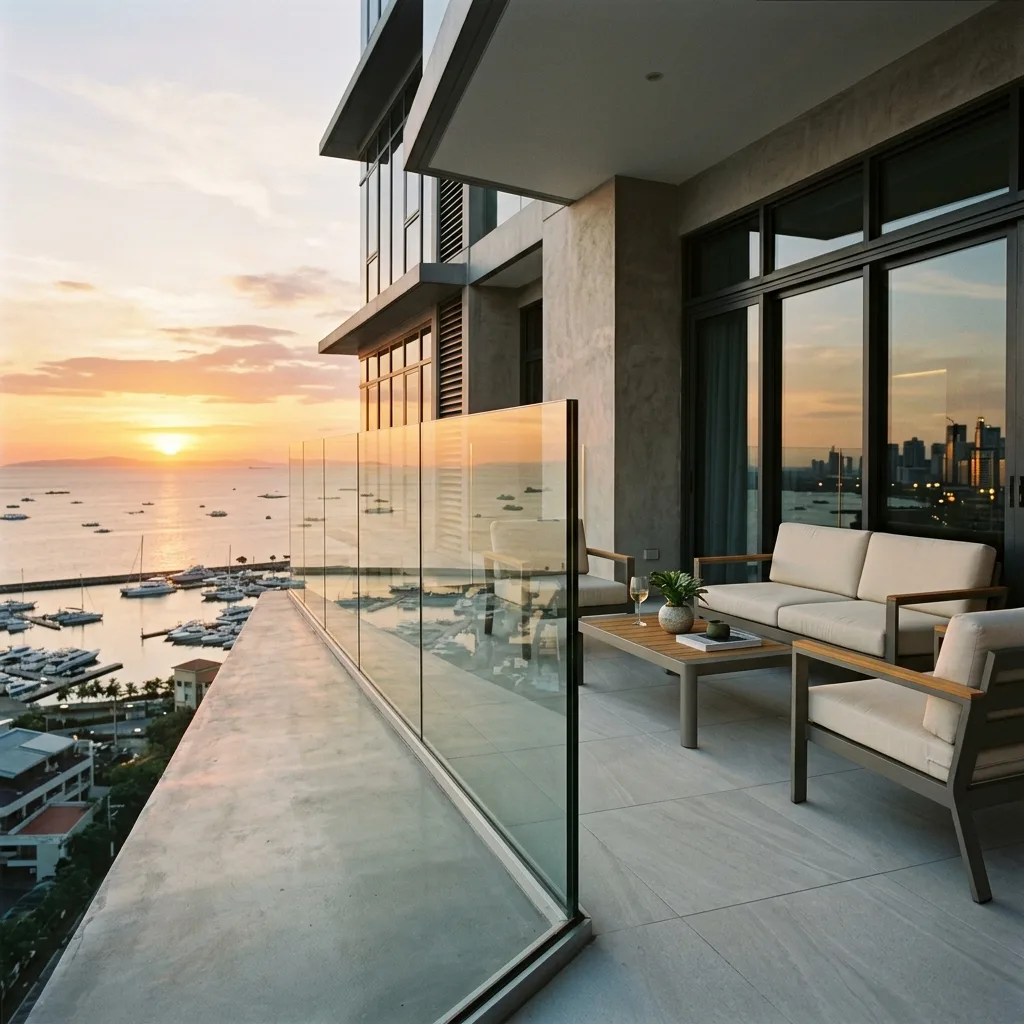
Whether you are building a modern beachfront villa in Batangas or renovating a high-rise condominium in BGC, the railing you choose dictates the entire aesthetic of the space. Traditional steel bars feel like a prison, and solid concrete parapet walls block the view you paid a premium for. Architectural glass railings provide safety and wind protection while maintaining 100% visual transparency. But because they are structural safety barriers designed to prevent falls, they require rigorous engineering, heavy-duty glass, and premium stainless steel hardware. Here is the comprehensive guide to specifying and pricing glass railings in the Philippines.
The 4 Primary Support Systems
The "look" of your railing—and a significant portion of the total project cost—is determined by how the glass is physically held in place. As a general architectural rule: the less metal you see, the higher the cost. This is because hiding the support structure requires much heavier glass and highly specialized clamping systems embedded into the floor.
| Support System | Aesthetic Style | Structural Requirement | Cost Premium |
|---|---|---|---|
| Post-Mounted (Framed) | Traditional / Industrial | Lowest. Posts bolt directly to the finished floor surface. | $ |
| Standoff Pins (Button Mount) | Modern / Floating | Requires exceptionally strong vertical fascia board/slab edge. | $$ |
| Spigots (Mini-Posts) | Minimalist / Resort style | Requires deep core-drilling into solid concrete. | $$$ |
| Base Shoe Channel | Ultra-Premium / Invisible | Requires heavy aluminum channel recessed into the floor slab. | $$$$ |
The Safety Glass Mandate: Tempered vs. Laminated
Under the National Building Code of the Philippines, standard annealed glass is strictly prohibited for any railing, balustrade, or guardrail application. If someone falls against standard glass, it shatters into lethal, guillotine-like shards. You must use safety glass. However, there is a massive difference between the two types of safety glass when used as a protective barrier.
Tempered Glass: This glass is heat-treated to be 4-5 times stronger than standard glass. It is incredibly resilient to blunt impacts. However, if it *does* break (for example, if struck by a sharp heavy metal object on its vulnerable edge), the entire panel instantly shatters into thousands of tiny, harmless cubes. The problem: The protective barrier is now completely gone. If this happens on a 10th-floor balcony, there is now an open hole that someone could fall through until the glass is replaced. For this reason, standard tempered glass (typically 10mm or 12mm) is only recommended for ground-floor applications, pool fences, or interior stairs with a low fall distance.
Laminated Safety Glass: This consists of two individual panes of glass bonded together by a tough, flexible PVB (Polyvinyl Butyral) or SGP (SentryGlas Plus) plastic interlayer. If laminated glass breaks, the glass cracks, but the shards remain stuck to the plastic interlayer like a spiderweb. The panel stays standing, and the protective barrier remains completely intact. For all upper-floor balconies, roof decks, mezzanines, and high-rise condominiums, Laminated Glass (specifically 6mm+6mm or 8mm+8mm) is the only responsible, architecturally sound choice. While laminated glass comes with a higher initial price tag, the liability protection it offers makes it non-negotiable for commercial building owners and high-end residential developers in the Philippines.
Stainless Steel Grades: 304 vs. 316
In the tropical, highly humid environment of the Philippines, the quality of the metal hardware is just as important as the glass itself. The industry uses two primary grades of stainless steel, and mixing them up is a costly mistake.
Grade 304 Stainless Steel: This is the standard for interior applications. It provides excellent corrosion resistance for indoor staircases, indoor mezzanines, and commercial mall railings. However, if used outdoors in coastal areas (like Cebu or Batangas), it will eventually develop "tea staining"—a brown surface rust caused by salt in the air.
Grade 316 (Marine Grade) Stainless Steel: This grade contains molybdenum, which drastically increases its resistance to chloride corrosion (saltwater and pool chemicals). If your property is near the ocean, or if the railing is enclosing a swimming pool, Grade 316 hardware is absolutely mandatory. It costs 20% to 30% more upfront than 304, but it prevents the entire expensive railing system from rusting away in three years. Never accept Grade 304 for an outdoor railing in the Philippines without explicit written acknowledgement of the rust risk.
Additionally, the finish of the stainless steel matters. A mirror-polished finish is less susceptible to rust than a brushed or satin finish, because the microscopic grooves in a brushed finish can trap salt and moisture. For extreme marine environments, a mirror-polished Grade 316 is the ultimate defense against corrosion.
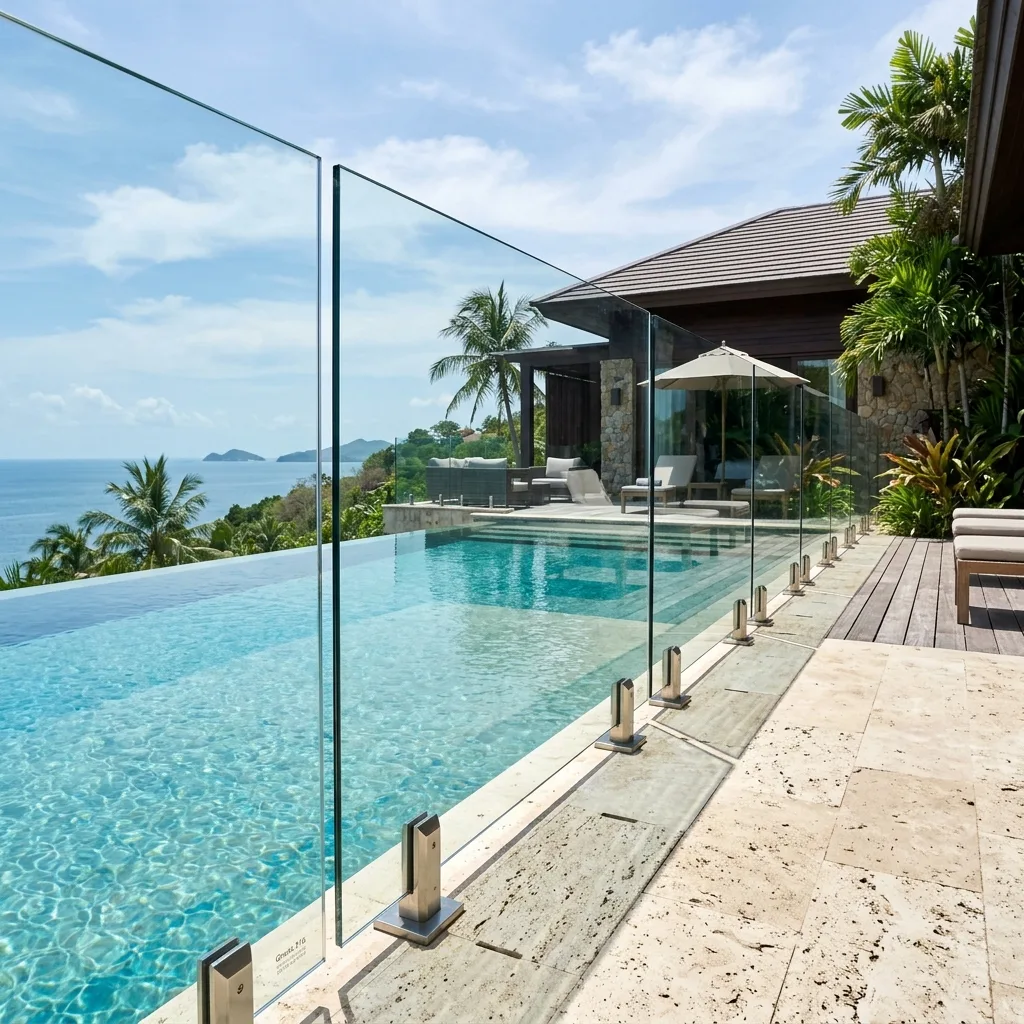
Beyond just the grade of the steel, the thickness of the metal is also a critical factor. Cheap, hollow imported spigots will flex under the weight of a heavy 12mm glass panel, causing the railing to lean out of plumb over time. We only use solid, cast stainless steel components that provide absolute rigidity and peace of mind.
Top Rails and Handrails: Form vs. Function
A purely frameless glass railing (just bare glass edges) looks incredible, but there are functional and code considerations that often mandate a top rail:
Commercial Code Compliance: Most commercial building codes require a continuous top handrail (either mounted directly on top of the glass or offset to the side on stainless brackets). This ensures that if a glass panel fails entirely, there is still a physical barrier preventing a fall.
Delamination Protection (Crucial for Outdoors): If you use laminated glass outdoors, the exposed top edge is vulnerable. Over time, rainwater and extreme humidity can seep into the PVB interlayer, causing "delamination"—cloudy, white bubbles forming between the glass layers. A slim stainless steel U-channel cap rail covers this exposed edge, acting as a roof for the glass and preventing moisture ingress.
Structural Rigidity: A continuous top rail ties all the individual, separate glass panels together into one unified structural element. This makes the entire railing system significantly stiffer, completely eliminating the slight "wobble" that can happen when someone leans heavily against a single standalone pane of glass. It also helps align the glass panels perfectly during installation, ensuring a flawless continuous edge.
Complete Pricing Guide (Per Linear Meter)
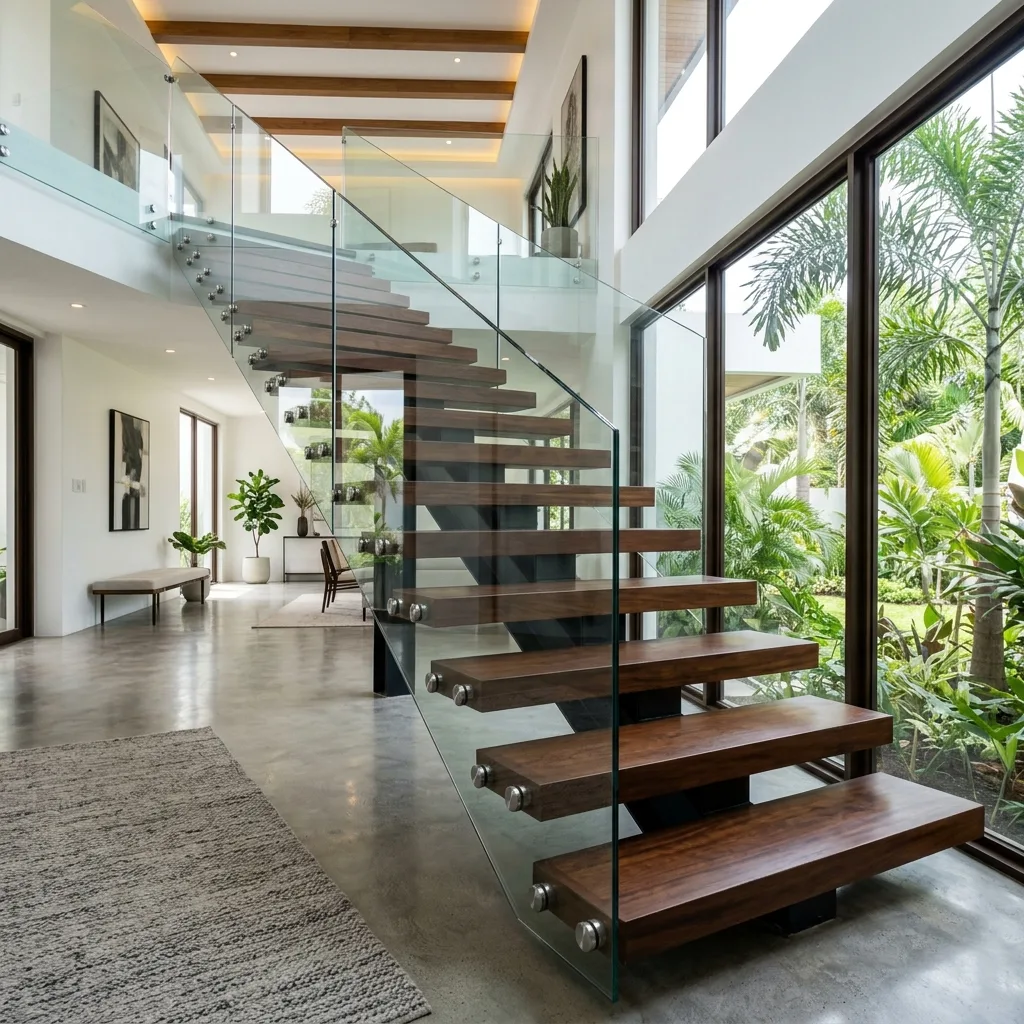
Glass railings are priced by the linear meter. The price includes the custom-cut glass, the stainless steel hardware, the structural anchoring materials, and the professional installation labor. These are comprehensive 2026 budgetary figures for standard heights (typically 1,000mm to 1,100mm depending on local code):
| Railing System Configuration | Glass Specification | Estimated Cost (per Linear Meter) |
|---|---|---|
| Post-Mounted (Stainless Posts) | 10mm Tempered Glass | ₱6,000 – ₱9,000 |
| Standoff Pins (Fascia Mount) | 12mm Tempered Glass | ₱8,500 – ₱12,500 |
| Spigots (Core-Drilled Mini Posts) | 12mm Tempered Glass | ₱11,000 – ₱16,000 |
| Base Shoe (Aluminum Channel) | 12mm Tempered Glass | ₱12,000 – ₱17,000 |
| Base Shoe (High-Rise Balcony) | 13.52mm Laminated (6+1.52PVB+6) | ₱16,000 – ₱24,000 |
Cost Add-ons to Consider:
- Curved Glass: For spiral staircases or curved balconies, the glass must be slump-bent in a kiln. This adds 150% to 200% to the raw glass cost.
- Marine Grade 316 Hardware Upgrade: Essential for coastal or pool properties. Adds ₱1,500 to ₱3,000 per linear meter.
- Stainless Steel Top Cap Rail: Highly recommended for rigidity and edge protection. Adds ₱1,200 to ₱2,500 per linear meter depending on the profile (round, square, or slim channel).
- Core Drilling: If installing spigots into heavily reinforced concrete containing dense rebar grids, specialized diamond-core drilling equipment is required, which adds labor time and equipment rental fees to the project.
The Installation Process: Structural Integrity is Non-Negotiable
Proper installation is literally a matter of life safety. The railing is only as strong as what it is bolted to. If a base shoe is bolted into weak, crumbling screed concrete, or if standoff pins are mounted into thin drywall rather than solid wood or steel fascia, the heavy glass panel will act as a lever and rip right out of the floor or wall when someone leans against it.
Our engineering team assesses the structural integrity of the mounting surface before fabrication begins. We exclusively use high-tensile stainless steel expansion anchors or specialized chemical epoxy anchors embedded deep into the structural concrete slab (bypassing the surface tiles and screed entirely). This ensures the railing can withstand severe lateral human loads and the intense typhoon-force winds common in the Philippines.
Do not cut corners on glass railing installations. The cost of failure is simply too high. A properly engineered glass railing system is a permanent architectural feature that will safely elevate the design of your property for decades.
Ready for a Modern Architectural Upgrade?
Contact GlassInstallerPH for a free structural assessment and itemized quotation. We ensure your railing is beautiful, code-compliant, and structurally sound for decades to come.