Commercial Storefront Glass Options for Philippine Businesses
Your storefront is your physical billboard. It needs to showcase inventory perfectly while surviving typhoons, meeting fire codes, and stopping break-ins. Here is the technical guide to getting it right.
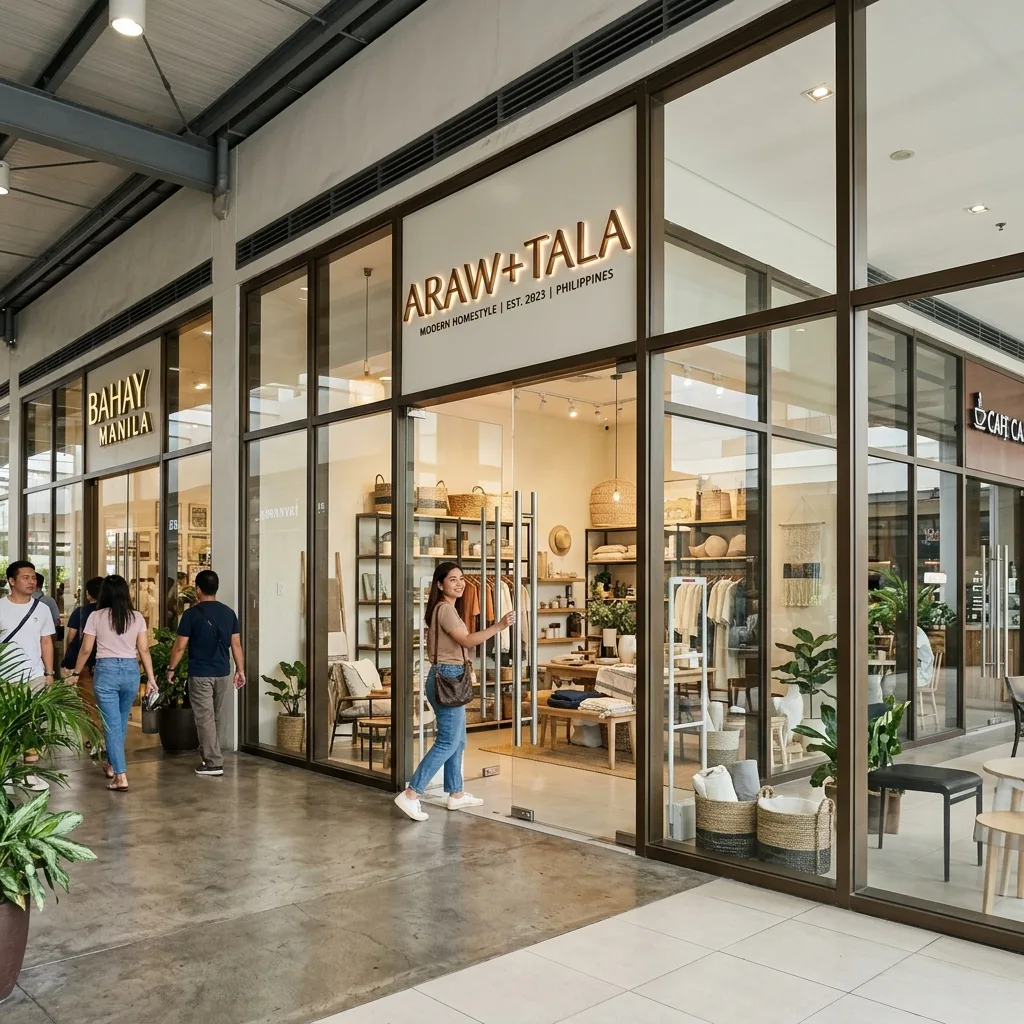
Choosing storefront glass in the Philippines is not just an aesthetic decision — it is a legal and structural one. The National Building Code of the Philippines dictates strict safety requirements for commercial glass. Furthermore, your storefront must withstand the intense solar heat of a tropical afternoon and the horizontal, wind-driven rain of a Category 4 typhoon. Specifying the wrong glass results in shattered panels, flooded retail floors, or air conditioning bills that destroy your operating margin.
The 4 Primary Glass Specifications
Almost all modern Philippine commercial storefronts are built using one of these four glass configurations. Standard annealed (float) glass is strictly prohibited by code for commercial storefronts because it shatters into lethal, guillotine-like shards.
| Glass Type | Thickness | Safety Feature | Primary Use Case | Cost Premium |
|---|---|---|---|---|
| Tempered Clear | 10mm or 12mm | Shatters into small pebbles | Standard retail shops inside malls | Baseline (₱3,500/sqm) |
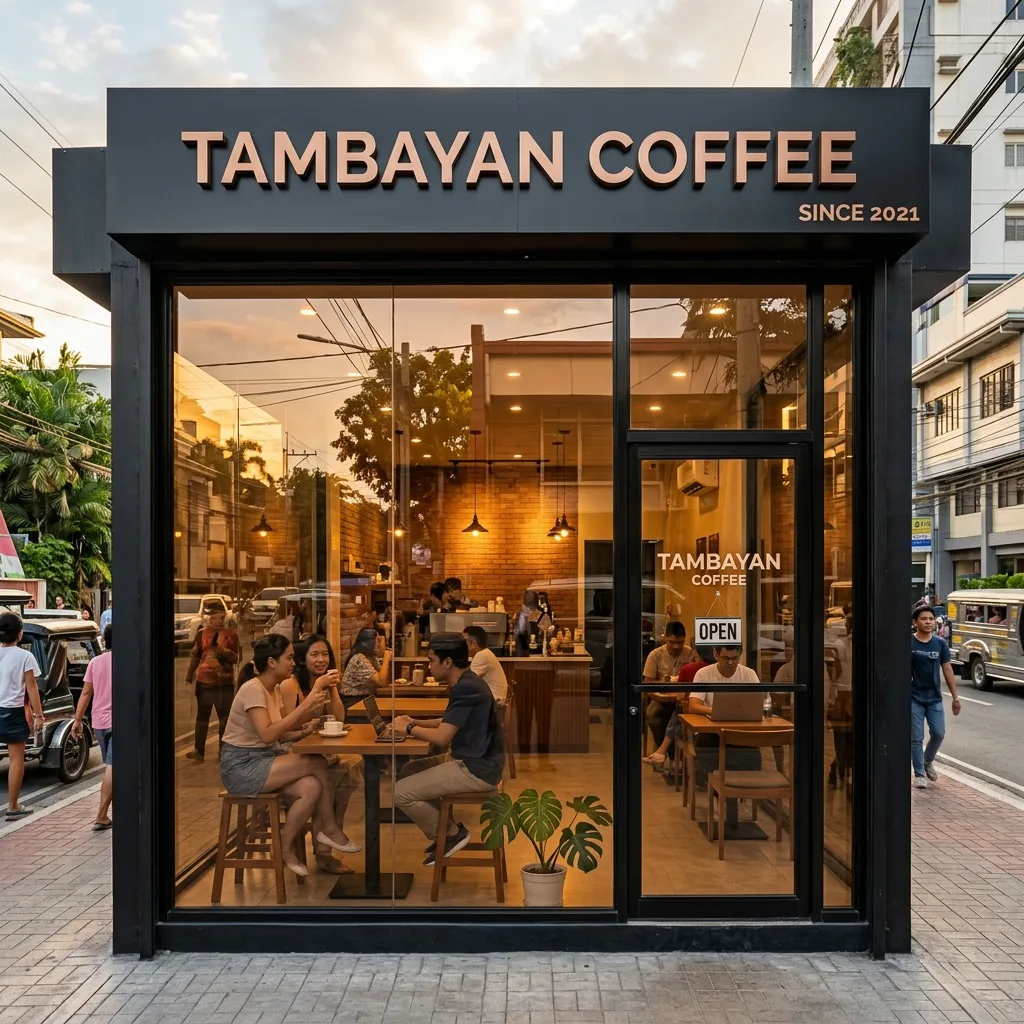
| Tempered Tinted | 10mm or 12mm | Shatters into small pebbles | Street-facing cafes, west-facing shops | +15-20% |
| Laminated | 6.38mm to 12.38mm | Holds together when broken | Jewelry, banks, high-crime areas | +40-60% |
| Double-Glazed (IGU) | 24mm total (6+12+6) | Thermal and acoustic barrier | Premium showrooms, sound studios | +150-200% |
Tempered Clear Glass: The Mall Standard
10mm or 12mm tempered clear glass is the baseline specification for 80% of commercial storefronts in the Philippines. The tempering process heats the glass to 600°C and rapidly cools it, creating a panel that is 4 to 5 times stronger than standard glass of the same thickness. If broken, it shatters completely into thousands of harmless, pebble-like pieces.
Pros: Most affordable safety glass; provides 90% visible light transmission; extremely strong against blunt impact.
Cons: Zero security once broken (the entire panel vanishes, leaving an open hole); poor thermal insulation; vulnerable to point-impacts on the edges.
Best For: Interior mall storefronts where weather is not a factor and security is handled by mall management; clothing retailers needing true-color merchandise display.
Tinted Glass: Solving the Tropical Heat Problem
If your storefront faces east (morning sun) or west (afternoon sun), clear glass will turn your retail space into a greenhouse. Your air conditioning units will run at 100% capacity and still fail to cool the space.
Tinted glass (typically bronze, gray, or dark gray) is created by adding metal oxides to the glass during manufacturing. It absorbs solar radiation rather than letting it pass through. A dark gray tinted glass can reduce solar heat gain by up to 45% compared to clear glass.
Laminated Glass: The Security Imperative
Tempered glass is strong, but when it breaks, it disappears instantly. For high-value retail, this is a catastrophic security failure. A thief with an emergency escape hammer can shatter a tempered glass door and enter the store in under 3 seconds.
Laminated glass solves this. It consists of two layers of glass bonded together by a tough Polyvinyl Butyral (PVB) plastic interlayer. If a thief hits laminated glass with a hammer, the glass cracks into a spiderweb pattern, but it remains rigidly glued to the plastic interlayer. The storefront remains physically closed. Breaching a properly framed laminated glass panel requires an axe, a crowbar, and several minutes of exhausting, noisy labor.
| Business Type | Recommended Security Glass | Why It Is Necessary |
|---|---|---|
| Jewelry & Pawnshops | 10.38mm or 12.38mm Laminated | Stops smash-and-grab attacks; buys time for security/police response. |
| Banks & Forex | Bullet-Resistant (Multi-layer laminated) | Mandated by BSP regulations for teller windows and main facades. |
| Electronics Retailers | 8.38mm Laminated | Prevents quick nighttime break-ins for high-value portable goods. |
| 24/7 Convenience Stores | 10mm Tempered + Security Film | Budget alternative: applies a tough polyester film over tempered glass. |
Framing Systems: How the Glass is Held
The glass is only half the equation. How that glass is mounted to the building structure determines the aesthetic appeal and the structural integrity against typhoon winds.
Standard Aluminum Center-Glazed: The glass sits in the middle of a 50mm to 100mm deep aluminum frame. It is the most common, cost-effective, and highly reliable for water sealing.
Flush-Glazed / Structural Glazing: The glass is pushed to the extreme exterior edge of the frame, and held in place by high-strength structural silicone sealant. From the outside, the aluminum framing is nearly invisible, creating a sleek, continuous glass facade. Costs 40-60% more than standard framing.
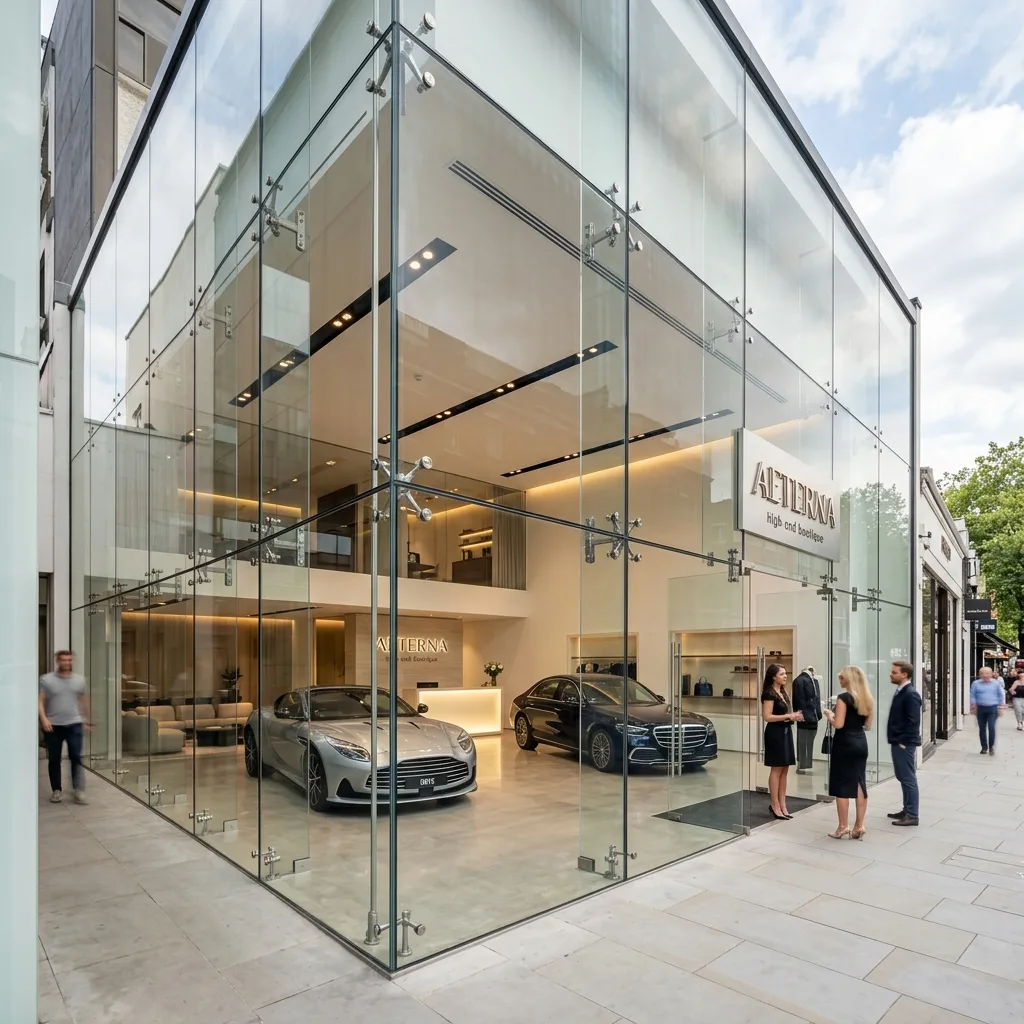
Frameless "Spider" Glass System: The absolute premium option. There are no vertical or horizontal aluminum frames. Giant glass panels are bolted together at the corners using heavy-duty stainless steel "spider" fittings (X-shaped metal arms) attached to structural glass fins or steel columns behind the facade.
Storefront Doors: The Critical Failure Point
The most expensive storefront in the world is useless if the door constantly breaks down. Storefront doors experience extreme abuse: slammed by wind, kicked by customers carrying boxes, and cycled hundreds of times per day.
Frameless Glass Doors (Patch Fitting Doors): These use 12mm tempered glass with stainless steel clamps at the top and bottom corners. They look incredibly premium and modern. However, because there is no aluminum frame to protect the glass edges, they are highly vulnerable to chipping if hit by a shopping cart. They rely on concealed floor springs buried in the concrete to control the swing.
Full-Frame Aluminum Doors: The glass is fully enclosed in a thick aluminum frame (typically Series 100 or heavy-duty commercial profiles). They look slightly more industrial but are nearly indestructible. If you run a high-traffic business (fast food, convenience store, clinic), you must use full-frame doors. Frameless doors will not survive high-traffic abuse.
Building Code and Permit Requirements
In the Philippines, commercial glass installation is strictly regulated. When applying for your building or fit-out permit with the LGU or mall administration, you must adhere to the following:
| Requirement | The Rule | The Penalty for Non-Compliance |
|---|---|---|
| Safety Glass | All glass below 1.5m from floor must be Tempered or Laminated. | Permit denial; forced replacement if inspected. |
| Door Specification | All glass doors must be minimum 10mm tempered (12mm for frameless). | Failed occupancy inspection. |
| Wind Load Capacity | Exterior facing glass must meet DPWH wind load calculation for the region. | Glass blowout during typhoons (massive liability). |
| Visual Markers | Large clear glass panels must have manifestation (stickers/frosting) at eye level. | Customer injury lawsuits from walking into glass. |
Estimated Costs for Commercial Projects (2026)
Storefront pricing is highly dependent on total height, wind load requirements, and access difficulty, but here are baseline estimates for typical commercial fit-outs in Metro Manila:
Basic Mall Storefront (5m wide × 3m high): 10mm clear tempered glass, standard aluminum framing, one frameless glass double door. ₱85,000 – ₱120,000
Street-Facing Cafe (8m wide × 3m high): 12mm tinted tempered glass, heavy-duty aluminum framing, two full-frame aluminum doors, silicone weather sealing. ₱160,000 – ₱220,000
High-Security Pawnshop (4m wide × 3m high): 10.38mm laminated clear glass, reinforced steel-core framing, security pass-through tray, bullet-resistant teller window. ₱180,000 – ₱250,000
Luxury Showroom (10m wide × 4m high): 15mm clear tempered glass, frameless stainless steel spider fittings, glass structural fins, oversized patch-fitting doors. ₱450,000 – ₱650,000
Our Commercial Installation Process
Commercial projects require absolute precision because delays cost you rent and revenue. We handle the complete process: laser site measurement (to the millimeter), structural assessment, engineering calculation for wind loads, shop drawing generation for mall admin approval, off-site fabrication, and after-hours installation to comply with mall regulations. Most standard storefronts are installed in 2 to 3 night shifts, ensuring your fit-out schedule remains on track.
Planning a Commercial Fit-Out?
Free site survey, structural assessment, and an itemized quotation optimized for your specific security and design requirements.