Glass Partition Ideas for Small Philippine Offices
Your 80-sqm office feels like 40 with drywall dividers. Glass partitions give you private rooms without killing the light, airflow, or visual space. Here are the professional designs that maximize every square meter.
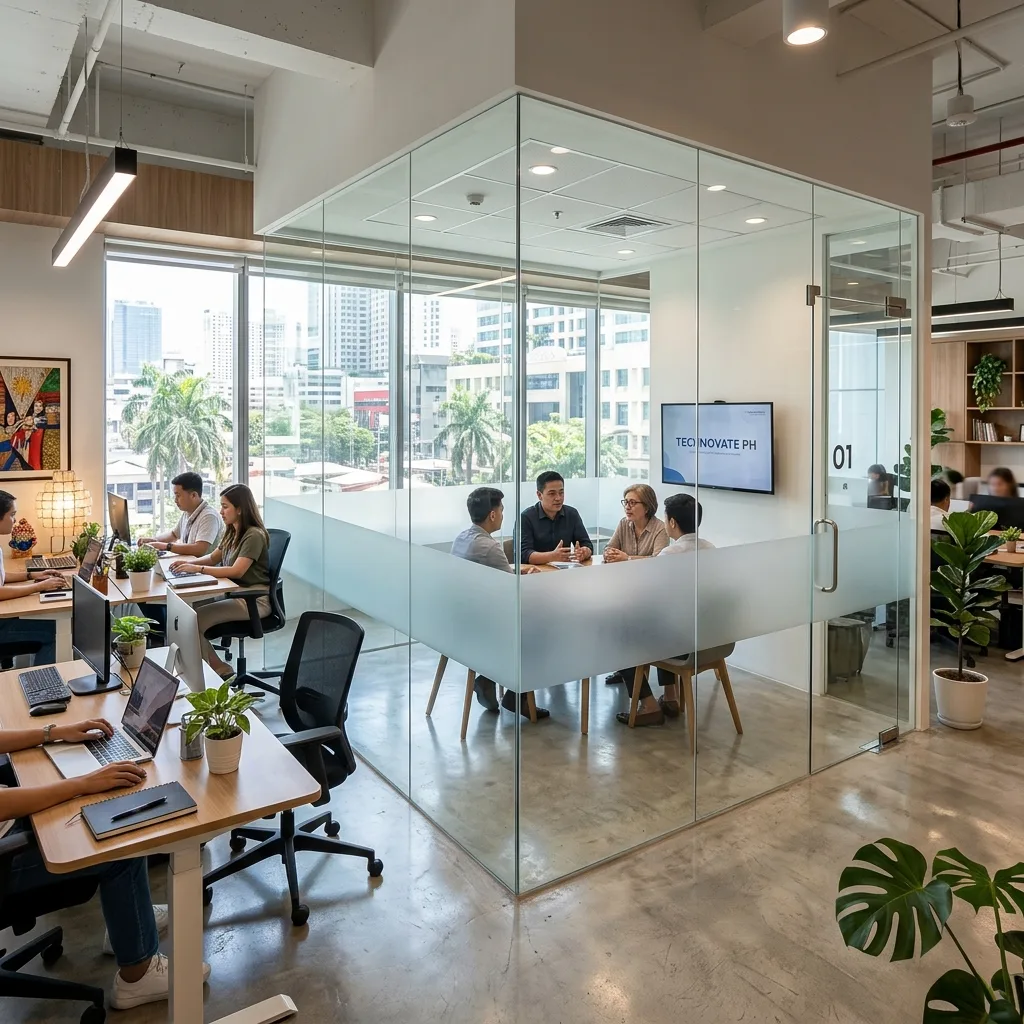
Small Philippine offices — BPO seats, startup spaces, professional service firms, and boutique agencies — share a universal architectural problem: you need private meeting rooms, manager offices, and quiet focus areas, but every solid drywall partition you build makes the office feel darker, smaller, and more claustrophobic. A 100-sqm office with four drywall rooms feels like a 60-sqm office. The exact same 100-sqm office built with glass partitions feels like a full 100 square meters. Natural light passes through every pane, and your eyes read right through the glass to the exterior windows, maintaining the sense of an expansive open-plan floor.
The 5 Design Strategies That Work in Tight Spaces
When square footage is limited, the design of your partitions dictates the flow and feel of the company. These are the five architectural approaches we recommend most frequently for Metro Manila offices under 150 square meters:
1. Floor-to-Ceiling Frameless Design: Extending the 10mm tempered glass from the raised floor directly into the ceiling grid eliminates visual breaks. No thick aluminum headers, no drywall bulkheads. The partition becomes virtually invisible. This is the single most impactful design decision for making a small office feel larger. In addition, framing out the ceiling often incurs extra drywall costs and delays; running the glass all the way up keeps the aesthetic clean and the build schedule fast.
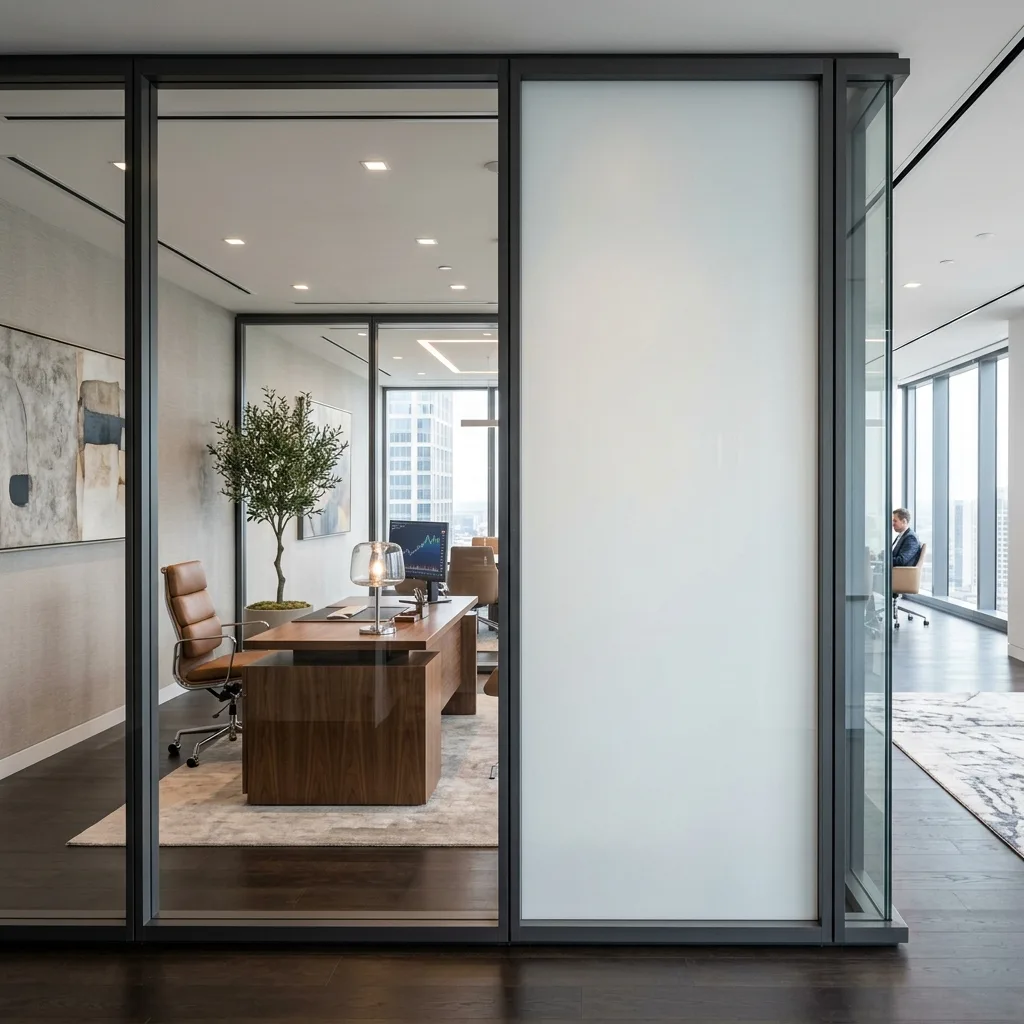
2. The "Frosted Band" Compromise: Fully clear glass lacks privacy; fully frosted glass blocks too much light. The solution is an acid-etched frosted band positioned at seated eye height (typically 900mm to 1,500mm from the floor). When you sit down for a meeting, your face and laptop screen are completely hidden from the outside. When you stand up, you can see over the band, maintaining a connection to the team. Light flows unimpeded through the clear glass above and below the band. This ensures that interior spaces without windows still benefit from perimeter daylight.
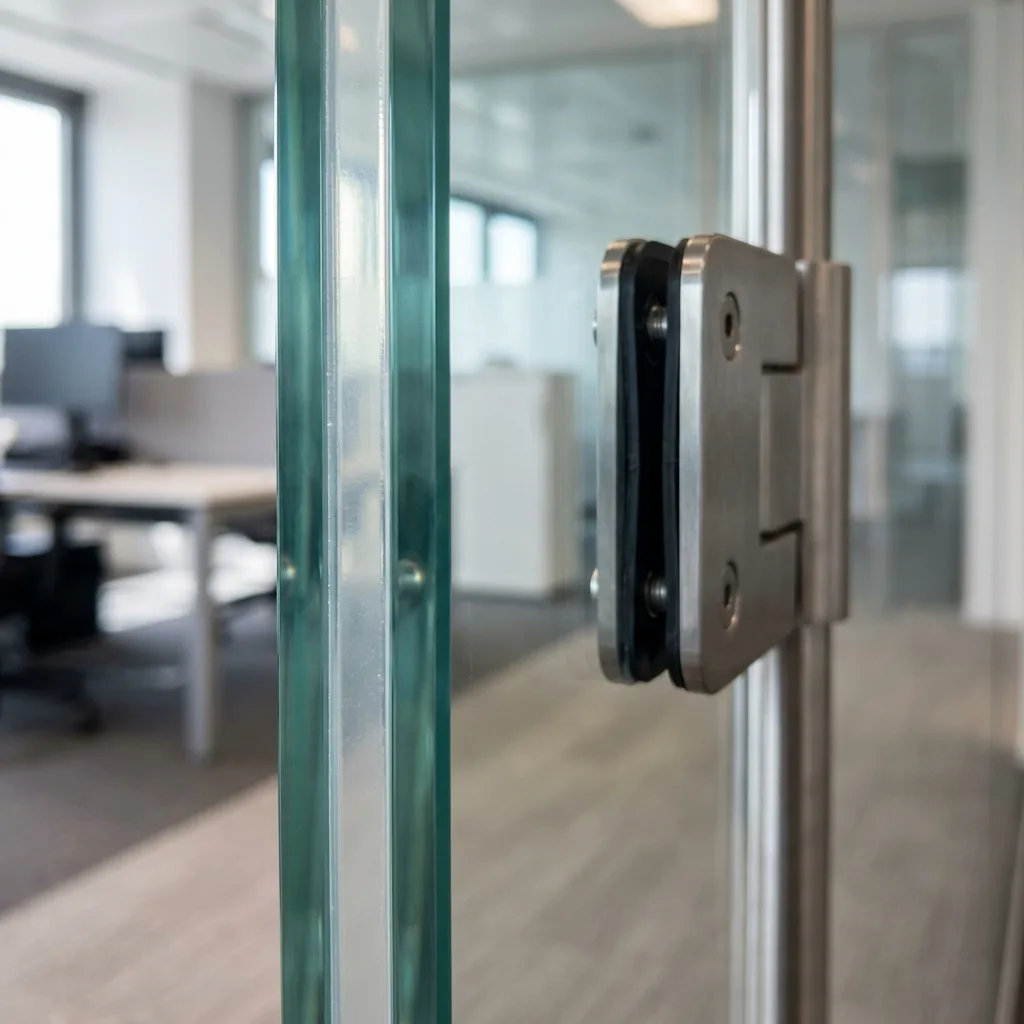
3. Frameless Glass Pivot Doors: Traditional framed doors eat up visual space and look heavy. Frameless glass pivot doors create wider effective openings and eliminate visible door jambs. The heavy-duty stainless steel pivot mechanism mounts flush into the floor and ceiling, making the heavy glass door appear to float effortlessly. Furthermore, they can swing in both directions, which is highly practical in small, tight corridors where swinging outward might hit a passing employee.
4. Back-Painted Glass Whiteboard Walls: If a room is too small for a TV and a whiteboard, replace one interior partition wall with back-painted white tempered glass. It serves double duty: an opaque room divider and a floor-to-ceiling writable whiteboard surface. It wipes clean instantly and never ghosts or stains like painted drywall or cheap melamine whiteboards. It also creates a stunning reflective backdrop that bounces light around the room.
5. Sliding / Stacking Glass Systems: If your office occasionally needs a large 30-person training room, but daily needs dictate two 15-person meeting rooms, install sliding glass panels on a heavy-duty ceiling track. They let you reconfigure the architecture of your office in 60 seconds. Open them for company town halls; close them for parallel client meetings. The panels stack compactly against one wall when not in use. They remove the need for expensive additional real estate by maximizing the utility of the space you already rent.
The Acoustic Problem — and How to Actually Solve It
The most common complaint from CEOs about their newly built glass partitions: "It looks great, but everyone outside can hear my phone calls." Standard 10mm single-pane tempered glass provides only 28 to 32 dB (decibels) of sound reduction. That is enough to dampen the hum of a server room, but completely insufficient for private HR conversations, legal meetings, or executive phone calls. Normal human speech at 1 meter is approximately 60 dB. With a 30 dB reduction, the person sitting outside your office still hears your conversation at 30 dB (which is a clearly audible whisper).
For true speech privacy in a commercial setting, you need a partition system rated at a minimum STC 35 dB (Sound Transmission Class). Here is how we engineer it:
| Acoustic Solution | STC Rating Achieved | Best Application |
|---|---|---|
| 10mm Tempered Glass (Standard) | 28-32 dB | Basic space division, visual separation only |
| 12mm Laminated Acoustic (6mm Glass + PVB + 6mm Glass) | 35-38 dB | Manager offices, standard meeting rooms |
| Double-Glazed System (6mm + 50mm Air Gap + 6mm) | 40-45+ dB | Confidential boardrooms, medical, HR, legal |
Acoustic laminated glass works by sandwiching a sound-dampening PVB layer between two sheets of glass. This layer acts as an acoustic shock absorber, disrupting sound waves and preventing them from passing through. Double-glazed systems offer even higher performance by creating a physical air gap between two separate panes of glass, which is the gold standard for recording studios and highly confidential executive suites.
The #1 Mistake: The Ceiling Plenum Leak
You can buy the most expensive double-glazed acoustic glass in the world, and it will be completely useless if you make this critical installation error: Stopping the partition at the drop ceiling.
Most office buildings have a suspended acoustic tile ceiling, with 1 to 3 feet of empty space (the plenum) above it before you hit the structural concrete floor of the tenant above. If you only build your glass partition up to the drop ceiling, sound waves will easily travel up through the lightweight acoustic ceiling tiles, bounce through the empty plenum space, and rain down into the adjacent office. It completely flanks the expensive glass.
To fix this, we install a highly dense acoustic baffle (mass loaded vinyl or specialized dense drywall) vertically in the plenum space, directly above the glass line, sealing it airtight against the structural concrete above. This forces the sound to try and penetrate the glass, rather than bypassing it over the top. Likewise, acoustic seals on the door itself—such as drop seals at the bottom and perimeter gaskets—are essential for blocking sound leaks.
Smart Glass (Switchable Privacy Glass)
For the ultimate executive office, we install PDLC (Polymer Dispersed Liquid Crystal) Smart Glass. By default, the glass is opaque, frosted white, providing 100% visual privacy. When you flip a wall switch (or press a remote control), an electrical current aligns the liquid crystals inside the glass lamination, instantly turning the entire partition perfectly clear. It is the ultimate flex for a boardroom, removing the need for clunky blinds or curtains.
Smart glass also offers UV protection and can act as a high-definition rear-projection screen when in its frosted state, turning a boardroom wall into a presentation display.
Structural Considerations and Safety Mandates
When planning glass partitions, structural integrity must be prioritized. The glass panels are heavy, often weighing over 50kg per square meter for thicker acoustic laminates. Floor channels must be securely anchored into the concrete slab, not just the raised access flooring. Additionally, all glass used in commercial partitions must be either tempered or laminated for safety. Standard annealed glass is illegal for these applications due to the severe injury risk if shattered.
Furthermore, fire codes dictate that certain corridors require fire-rated assemblies. If a glass partition borders an emergency egress route, specialized fire-rated glass and framing may be mandated by the Bureau of Fire Protection. We coordinate these compliance checks during our initial site survey.
Project Costs for Standard Configurations (2026)
Real budgetary costs for common Philippine office partition configurations. Pricing is highly dependent on glass specification, acoustic hardware, and ceiling height.
| Configuration Type | Glass Specification | Total Estimated Cost (Installed) |
|---|---|---|
| Basic Meeting Room (2.5m × 2.5m, 2 exposed walls) | 10mm Tempered Clear Glass | ₱45,000 – ₱65,000 |
| Manager Office (3m × 3m, frosted band + pivot door) | 10mm Tempered with Frosting | ₱70,000 – ₱95,000 |
| Acoustic Boardroom (3m × 4m) | 12mm Laminated Acoustic PVB | ₱110,000 – ₱160,000 |
| Training Room Divider (6m wide, 3 sliding panels) | 10mm Tempered Clear | ₱95,000 – ₱140,000 |
| Executive Smart Glass Room (3m x 3m front wall) | Switchable PDLC Smart Glass | ₱180,000 – ₱250,000 |
Prices include custom fabricated glass panels, heavy-duty hardware (U-channels, clamps, pivot hinges, floor springs), structural silicone sealing, and expert installation. Excludes electrical work for smart glass and HVAC modifications. Full-height plenum acoustic sealing adds approximately ₱2,500 per linear meter.
Our Complete Office Fit-Out Process
We handle the complete architectural process. It begins with a site survey and laser measurement. We consult on space planning, recommending the exact STC glass specification based on your acoustic and privacy requirements. We handle fabrication, delivery, and installation, usually completing a multi-room fit-out in 5 to 7 working days. Crucially, we coordinate with your general contractor regarding floor finishes, HVAC routing, and ceiling grids before the glass arrives on site to ensure a flawless execution. Poor coordination leads to costly delays, which is why we insist on proactive project management from day one.
Planning a Commercial Fit-Out?
Book a free site survey. We will evaluate your acoustic requirements, measure your space, and provide a binding itemized quotation within 48 hours.