Powder Coating vs Anodized Aluminum — Which Finish Lasts Longer?
Every aluminum window frame in the Philippines faces three constant enemies: extreme UV radiation, coastal salt air, and monsoon humidity. Here is the definitive engineering comparison of how powder coating and anodizing perform against these threats over 5, 10, and 15 years.
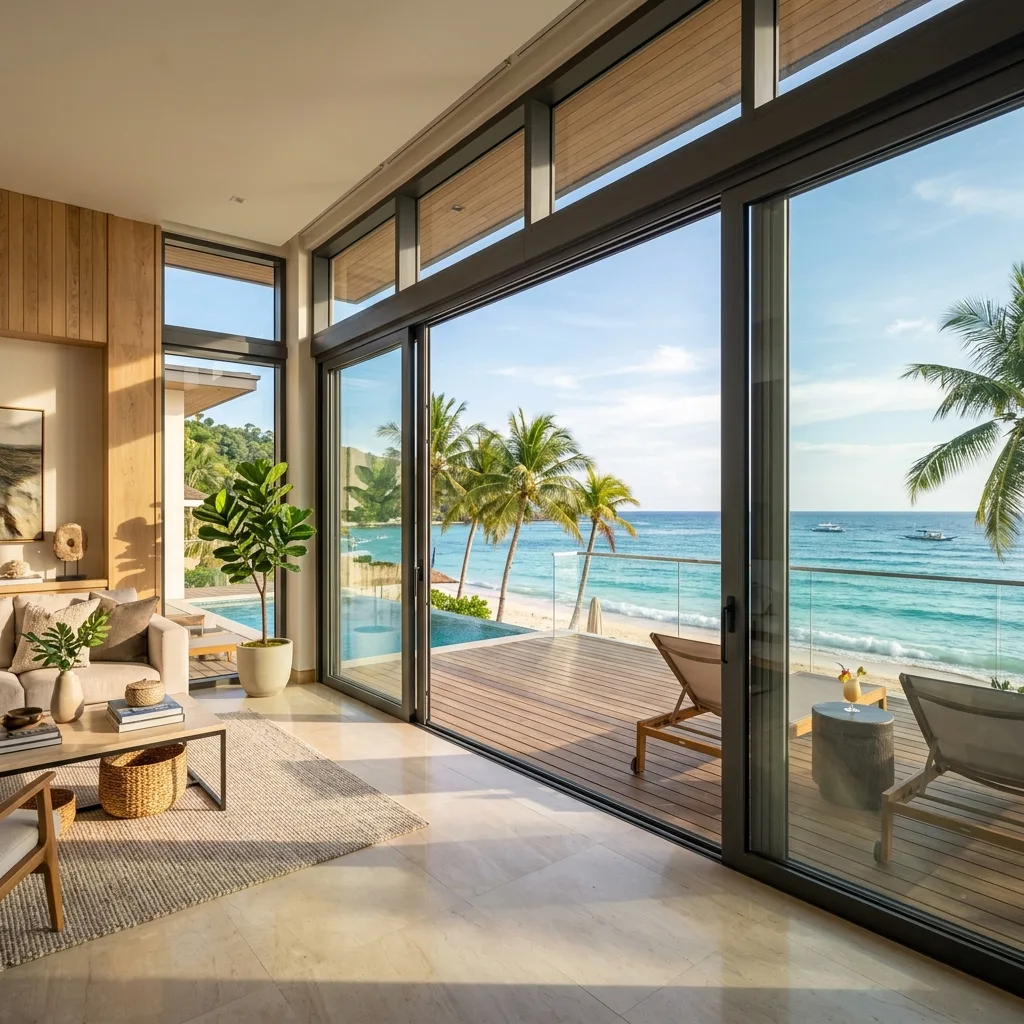
When ordering custom aluminum windows or doors, one of the most critical decisions you will make is how the metal is finished. The surface finish determines not only how the frame looks on day one, but how well it resists corrosion, pitting, fading, and chalking over the next two decades. In the aggressive tropical climate of the Philippines—where UV index levels frequently hit 11+ and salt-laden humidity blankets the coastal regions—choosing the wrong finish guarantees you will be replacing your expensive windows far sooner than you should. The debate always comes down to two industrial standards: Powder Coating and Anodizing.
The Chemistry: How Each Finish Actually Works
To understand which finish is better for your home, you must first understand that these two processes are fundamentally different on a molecular level. One alters the metal itself, while the other applies a protective jacket over it.
Anodizing is an electrochemical process. Raw aluminum extrusions are submerged in an acid electrolyte bath and a massive electrical current is passed through the liquid. This forces the surface of the aluminum to oxidize rapidly and uniformly. The result is a highly controlled layer of aluminum oxide—a material that is incredibly hard (harder than the base aluminum and even harder than some steels). This oxide layer is not a paint; it is fully integrated with the underlying aluminum at the molecular level, meaning it can never peel, flake, or blister. The resulting finish is typically 5 to 25 microns thick and provides a beautiful, deep metallic sheen.
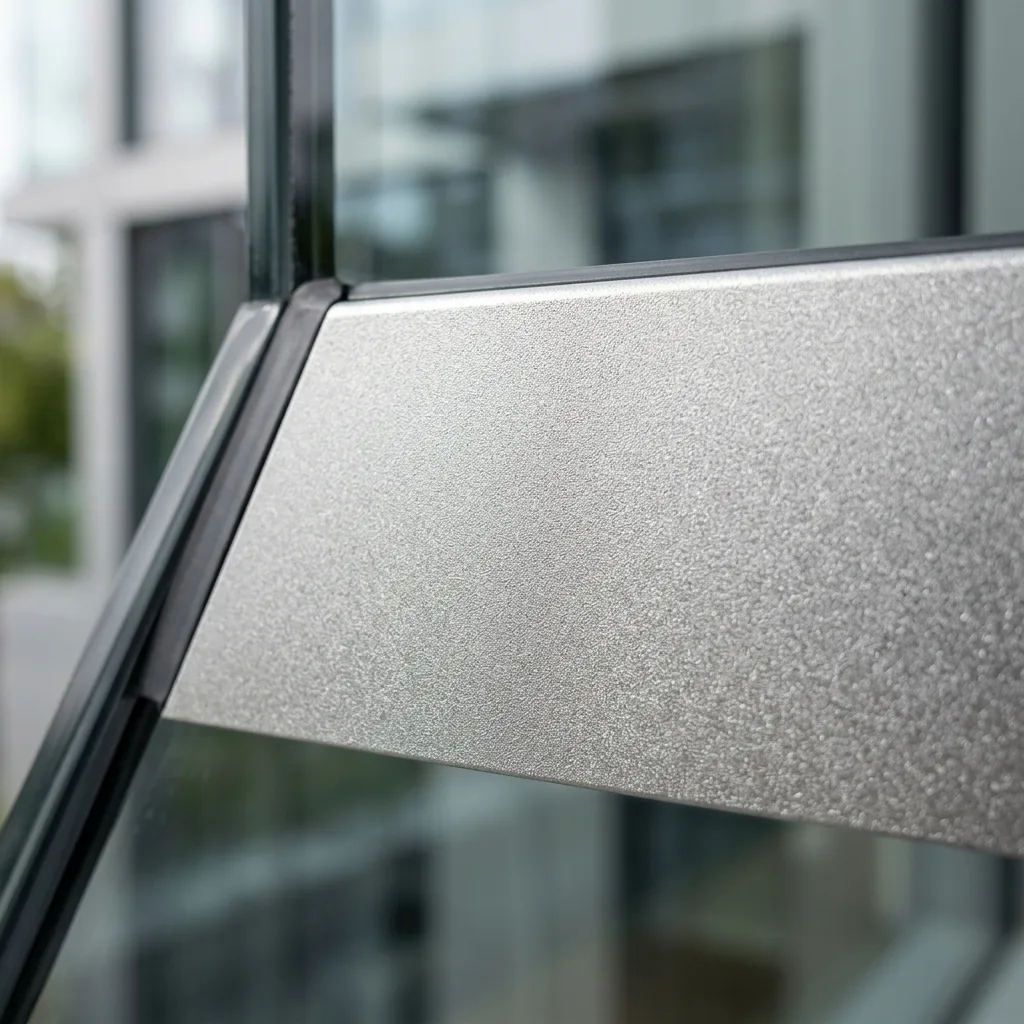
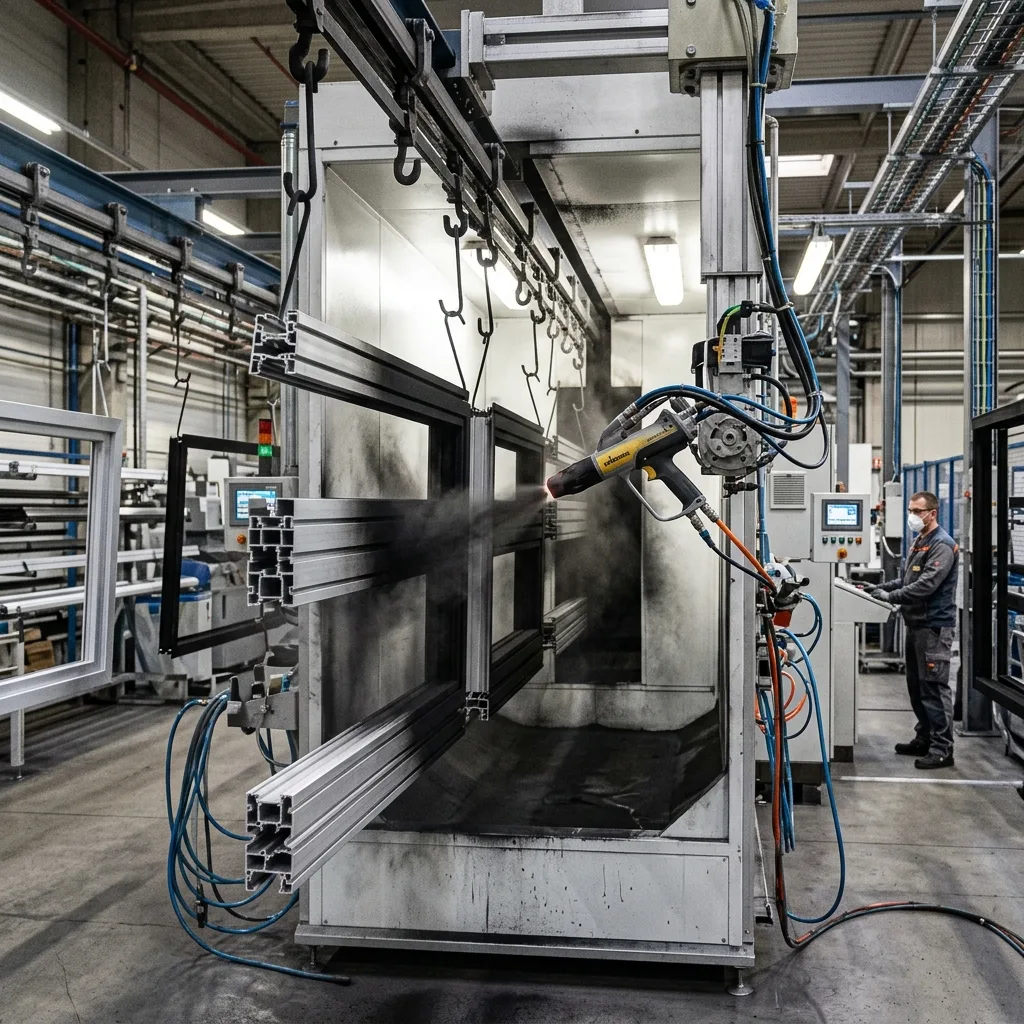
Powder coating is a completely dry finishing process. Instead of liquid paint, fine particles of dry polymer resin (usually polyester, polyurethane, or PVDF) are given a negative electrostatic charge. The raw aluminum frame is grounded (given a positive charge). When the powder is sprayed, it is magnetically drawn to the aluminum, wrapping around the frame evenly. The coated frame is then moved into an industrial curing oven and baked at 180 to 220 degrees Celsius. The dry powder melts, flows together, and chemically cross-links into a continuous, dense, and highly durable plastic-like skin that sits on top of the metal. This coating is thick—typically 60 to 120 microns.
Performance Comparison Across Key Metrics
Both finishes are excellent, but they excel in completely different environments. Here is how they stack up against the specific threats faced by Philippine architecture.
| Performance Factor | Anodized Aluminum | Powder Coated Aluminum |
|---|---|---|
| Coating Thickness | 5 to 25 microns | 60 to 120 microns |
| Physical Scratch Resistance | Exceptional (Extremely hard surface) | Moderate (Can be scratched or chipped by sharp impacts) |
| Peeling or Flaking Risk | Zero (Integrated into the metal) | Low to Moderate (Can blister if the pre-treatment was poor) |
| UV Resistance (Fading) | Exceptional (Inorganic, unaffected by UV) | Good to Exceptional (Depends entirely on the powder grade used) |
| Salt Air Resistance (Coastal) | Poor to Moderate (Prone to chloride pitting) | Exceptional (Provides a thick physical barrier against salt) |
| Color Options available | Very limited (Silver, Bronze, Champagne, Black) | Unlimited (Any RAL color, metallic, matte, or wood-grain sublimation) |
| Color Consistency between batches | Difficult (Hard to match across large projects) | Excellent (Highly uniform color replication) |
| Repairability on site | Impossible (Cannot be touched up) | Possible (Can use liquid touch-up paint for minor scratches) |
| Cost Premium over Raw Aluminum | +5% to 10% | +15% to 25% |
The Coastal Death Sentence: Salt Air Pitting
If you live in Metro Manila, interior Cavite, or the highlands of Antipolo (locations far away from ocean spray), both finishes will easily perform well for 15 to 20 years. The performance difference is marginal, and your choice should be based purely on aesthetic preference and project budget.
However, if your property is within 5 kilometers of the Philippine coastline (such as Mactan Island in Cebu, the Batangas coast, the Davao Gulf, or beachfront properties in La Union), the rules change entirely. In these environments, anodized aluminum will often begin showing visible white pitting within 3 to 5 years. Why?
The hard aluminum oxide layer created by anodizing is incredibly scratch-resistant, but at a microscopic level, it is porous. When salt-laden humidity from the ocean settles on the frame, chloride ions penetrate these microscopic pores. Once the chloride reaches the raw aluminum base beneath the oxide layer, it triggers aggressive galvanic corrosion. This corrosion expands from the inside out, creating ugly white craters (pitting) that destroy the structural integrity of the frame. Once this process starts, no amount of cleaning can stop it.
Powder coating solves this problem perfectly. Because it applies a continuous, dense, 100-micron thick polymer film over the metal, there are no microscopic pores for the chloride ions to enter. It acts as an impenetrable physical raincoat.
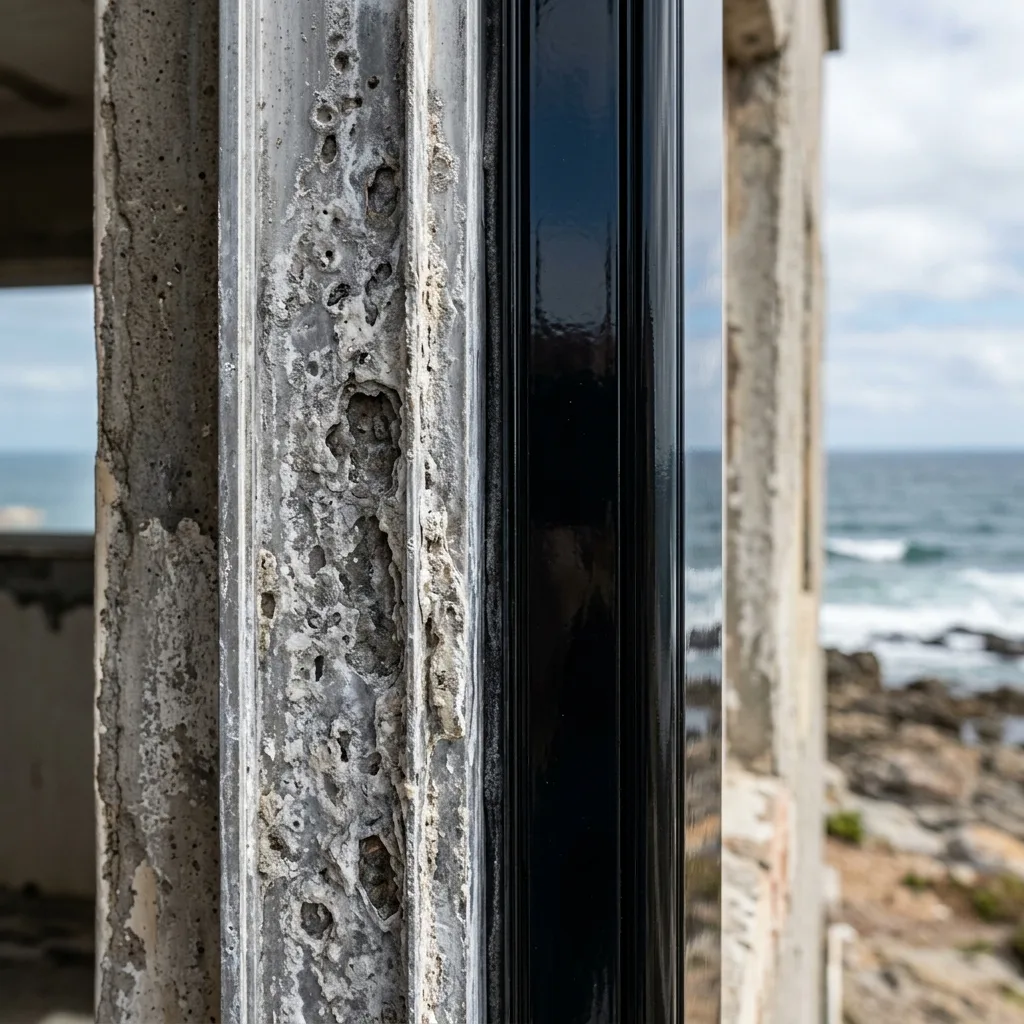
This is why GlassInstallerPH strictly mandates powder coating for all coastal and marine installations. The 15 to 25 percent initial cost premium is statistically insignificant when compared to the massive expense of ripping out and replacing heavily corroded window frames after just 5 years.
A Note on Mill Finish (Raw Aluminum)
It is important to address the cheapest option available at many local Philippine hardware stores: Mill Finish. This is raw, uncoated aluminum straight from the extrusion die. It has zero protective coating.
In the tropical humidity of the Philippines, mill finish aluminum begins oxidizing almost immediately. Within 3 to 6 months, the surface will develop a dull, rough, chalky white appearance. You cannot clean this off with soap, because the chalk is the metal itself degrading into aluminum oxide powder. Furthermore, this rough oxide layer acts like a sponge, holding moisture against the frame and accelerating the corrosion process. We refuse to install mill finish frames for any application, residential or commercial. The initial cost savings are completely erased by the rapid structural degradation.
Environmental Impact and Sustainability
In modern Philippine architectural design, sustainability and the environmental impact of building materials are becoming major deciding factors for high-end residential projects and LEED-certified commercial buildings. When comparing powder coating to anodizing, the environmental footprints differ significantly.
Powder Coating (Highly Sustainable): Because powder coating is a dry process, it does not require toxic chemical solvents or release harmful Volatile Organic Compounds (VOCs) into the atmosphere. Furthermore, the electrostatic application process is highly efficient. Any "overspray" powder that does not adhere to the aluminum profile can be easily collected in a filtration system, recycled, and reused in the next batch. This results in nearly 98% utilization of the raw material with almost zero hazardous waste. The thermal curing process does consume electricity, but modern industrial ovens are increasingly powered by renewable energy grids.
Anodizing (Chemical Intensive): The anodizing process is inherently chemical-heavy. It requires submerging the raw aluminum extrusions into large tanks of sulfuric acid. While the acid can be filtered and reused for a period, it eventually becomes saturated with aluminum sulfate and must be neutralized and disposed of as industrial chemical waste. Additionally, the process generates aluminum hydroxide sludge, which must be carefully processed in specialized waste management facilities. While highly regulated modern anodizing plants minimize environmental damage, the baseline process is significantly more hazardous than dry powder coating.
Maintenance Requirements and Warranty Limitations
No surface finish is entirely maintenance-free, especially in the Philippines. However, the cleaning protocols and the manufacturer warranties differ based on the finish you select.
Anodized Aluminum Maintenance: Because the anodized oxide layer is microscopically porous, dirt, pollution, and salt can become trapped within the surface over time. If left uncleaned in coastal areas, this leads to the rapid galvanic pitting discussed earlier. To maintain the warranty on an anodized frame in a coastal zone, you must actively clean the frame with a mild, pH-neutral soap every 30 to 60 days. Furthermore, we highly recommend applying a thin coat of automotive paste wax (like carnauba wax) to the exterior anodized surface twice a year. The wax acts as a temporary physical plug for the microscopic pores, preventing salt penetration. Never use highly alkaline or highly acidic cleaners (like muriatic acid or bleach) on anodized aluminum, as it will dissolve the oxide layer instantly.
Powder Coated Maintenance: Maintaining a powder-coated frame is significantly easier. Because the polymer surface is non-porous and incredibly smooth, dirt and salt do not stick to it aggressively. A simple wash with warm soapy water every 3 to 6 months is usually sufficient, even in coastal areas. While applying automotive wax to a powder-coated frame will certainly increase its UV resistance and make it shine, it is not structurally mandatory to prevent pitting the way it is for anodized frames. Powder coating warranties are generally longer and have fewer strict maintenance stipulations.
Final Architectural Recommendations
To maximize the lifespan of your investment, align your finish choice with your specific building environment:
- Inland Residential (Metro Manila, interior Calabarzon): Either finish performs excellently. Anodized aluminum is a fantastic, cost-effective choice if you like the metallic aesthetic. If you require specific architectural colors (like Matte Black or Wood-grain), choose powder coating.
- Coastal Residential (Within 5km of the sea): Powder coating is absolutely mandatory. For extreme beachfront properties, specify a "Marine-Grade" PVDF powder coat, which uses superior resins designed specifically to resist aggressive UV fading and salt spray.
- Heavy Commercial / Retail Storefronts: High-traffic doors are constantly kicked, bumped with shopping carts, and scrubbed by janitorial staff. Standard powder coating can chip under heavy impacts. For ground-level commercial doors, heavy-duty Anodizing is often preferred because its extreme surface hardness resists scratching far better than polymer coatings.
Protect Your Investment
Whether you are building a high-rise condo in Makati or a beachfront villa in Cebu, our engineers will specify the exact aluminum finish required to guarantee a 20-year lifespan in your specific microclimate.