Curtain Wall Systems in the Philippines — Complete Guide
From low-rise corporate headquarters to 50-story residential towers, the curtain wall defines the modern Philippine skyline. Here is the engineering breakdown of how they work, how they handle typhoons, and what they cost to build.
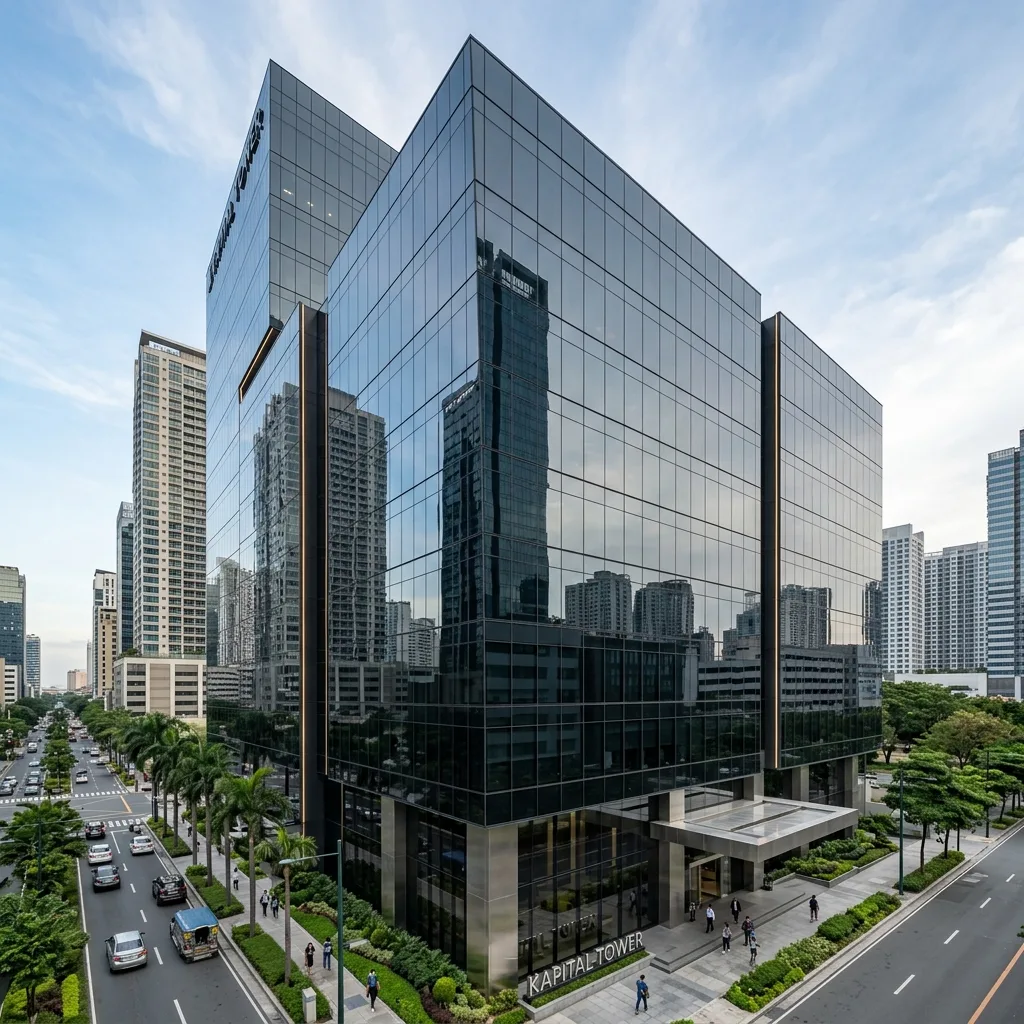
Walk through Bonifacio Global City (BGC) or the Makati Central Business District, and nearly every building you see is wrapped in glass. That glass is not simply inserted into holes in a concrete wall — it is an independent, non-structural envelope known as a Curtain Wall. Understanding how these systems work is critical for architects, developers, and general contractors planning commercial projects in the Philippines.
What Exactly is a Curtain Wall?
The defining characteristic of a curtain wall is right in its name: it hangs from the building structure like a curtain. It carries no dead load from the building itself (unlike load-bearing concrete walls). Its only structural responsibilities are to carry its own weight and to transfer wind loads — specifically the intense typhoon wind pressures common in the Philippines — back to the primary building structure.
The aluminum framework spans continuously across multiple floors, anchoring to the edge of the concrete floor slabs via heavy-duty steel embedments or expansion bolts. Because it sits entirely on the exterior face of the floor slabs, it creates a continuous, unbroken glass aesthetic from the ground floor to the roof parapet.
System 1: Stick-Built Curtain Walls
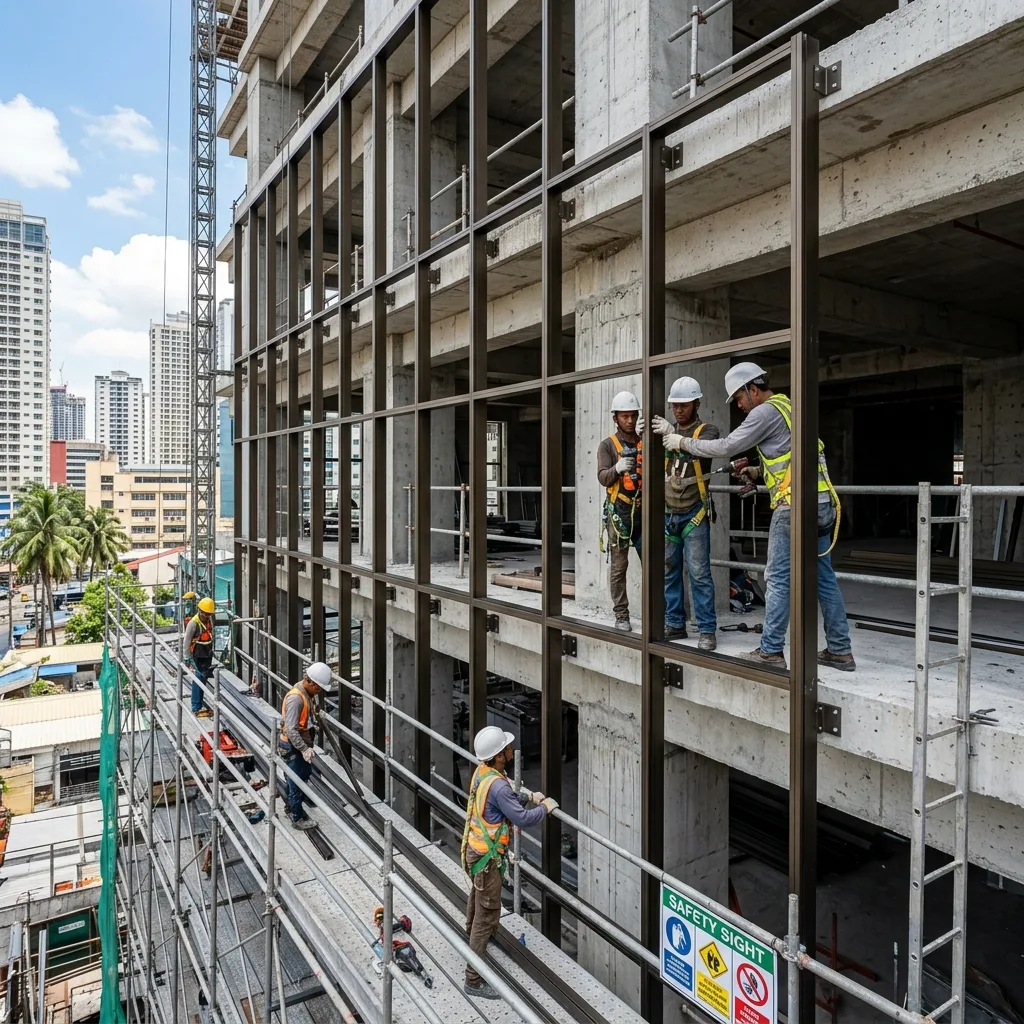
How it works: The curtain wall is constructed one piece ("stick") at a time directly on the building facade. First, vertical aluminum mullions are anchored to the floor slabs. Second, horizontal transoms are screwed in between the mullions to create a grid. Third, the glass panels are lifted into place. Finally, exterior pressure plates and snap covers are applied to lock the glass in.
| Stick-Built Characteristic | The Reality in the Field |
|---|---|
| Primary Advantage | Highly flexible. Adjustments for uneven concrete slabs can be made on site. |
| Primary Disadvantage | Slow installation speed (approx. 15-25 sqm per day). |
| Access Requirement | Requires exterior scaffolding or gondolas for the entire installation process. |
| Best Application | Low to mid-rise buildings (1 to 6 floors) and complex, angular facade designs. |
System 2: Unitized Curtain Walls
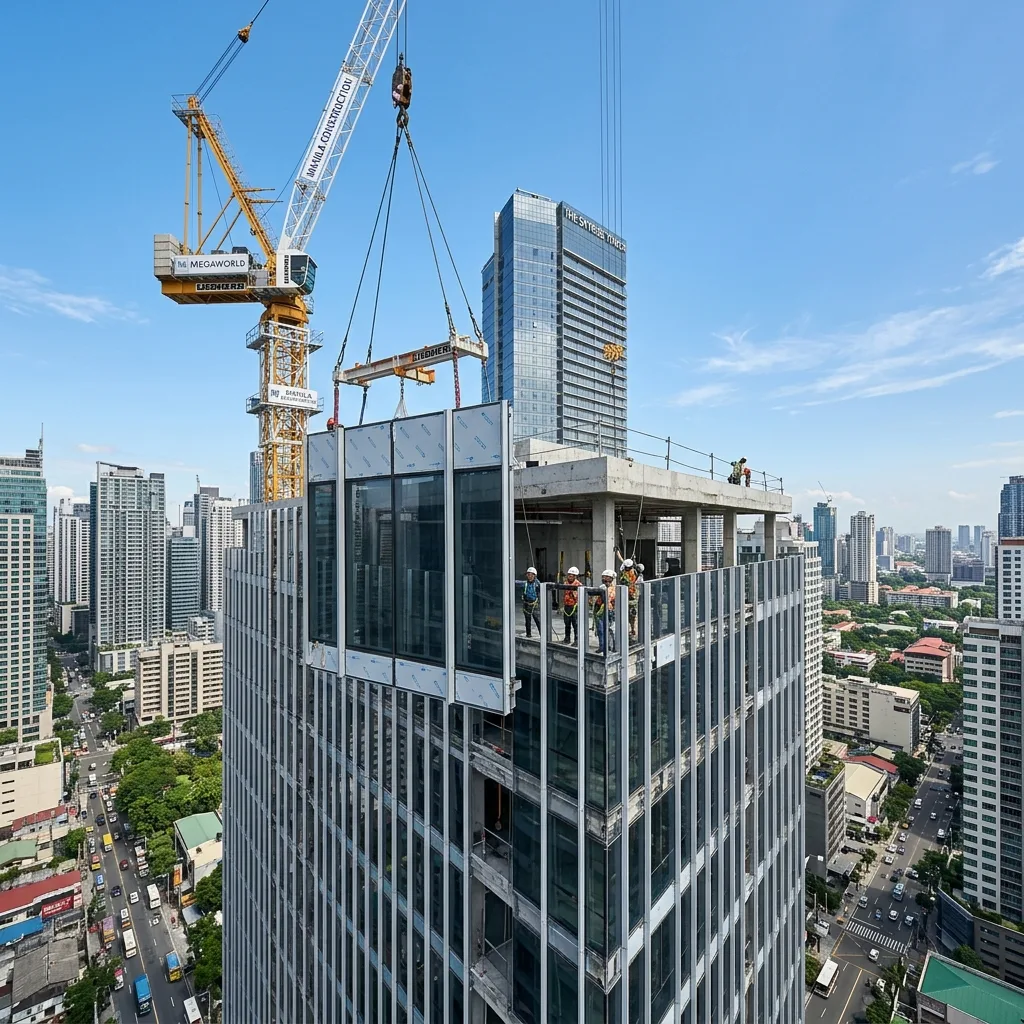
How it works: The entire facade is divided into massive rectangular units (typically one floor tall and 1.5 meters wide). These units are 100% assembled in a climate-controlled factory — including the aluminum frame, the glass, the structural silicone sealing, and the operable window vents. The completed units are trucked to the site, lifted by tower crane or floor hoist, and hung onto pre-installed steel brackets on the floor slabs. The panels physically interlock with each other using a male-female joint system with rubber gaskets.
| Unitized Characteristic | The Reality in the Field |
|---|---|
| Primary Advantage | Extreme speed (up to 60+ sqm per day). Building is closed off quickly. |
| Primary Disadvantage | Requires massive upfront engineering and longer lead times before installation begins. |
| Quality Control | Superior. Silicone curing happens in a clean factory, not on a dusty, rainy jobsite. |
| Best Application | High-rise towers (10+ floors) and massive surface areas over 5,000 square meters. |
Aesthetic Variations: Capped vs Structural Glazing
Once you choose the structural system (Stick or Unitized), you must choose the exterior aesthetic. How do you want the glass to look from the street?
Capped (Face-Sealed) Systems: The glass is mechanically held in place by aluminum pressure plates bolted into the mullions from the outside. Decorative aluminum snap covers are then clipped over the pressure plates. You see a distinct grid of vertical and horizontal aluminum lines on the building exterior. This is the traditional, robust, and cost-effective approach.
Structural Glazing (SG): Also known as flush-glazing. There are no exterior aluminum caps. The glass is bonded directly to the aluminum mullions using high-strength structural silicone sealant. From the outside, the facade looks like a single, continuous sheet of flat glass intersected only by tight, black silicone joints. It is the ultra-modern, premium look demanded by Class-A corporate towers.
Wind Load Engineering for Philippine Typhoons
The Philippines lies in the most active typhoon belt on Earth. A curtain wall failure during a Category 5 typhoon is catastrophic. Therefore, the National Structural Code of the Philippines (NSCP) mandates strict wind load calculations based on the building's location, height, and surrounding terrain.
Curtain wall engineers must account for both positive wind pressure (wind pushing against the glass) and negative wind pressure (suction pulling the glass off the building as wind speeds around the corners). Building corners and parapets experience the highest suction forces — often requiring deeper aluminum mullions and thicker glass at the corners of the tower compared to the center of the facade.
Thermal Performance and Glass Specification
If you wrap a building in glass in the tropics, you are building an oven. Without the correct glass specification, the HVAC (air conditioning) system will fail to cool the building, and the electricity costs will bankrupt the tenants.
| Glass Specification | Solar Heat Gain Coefficient (SHGC) | Application and Performance |
|---|---|---|
| Single Clear Glass | 0.82 (Terrible) | Transmits 82% of solar heat. Unusable for modern office towers. |
| Tinted Glass (Bronze/Gray) | 0.55 - 0.65 (Moderate) | Absorbs heat. Standard for budget mid-rise buildings. |
| Low-E Coated Single Glass | 0.35 - 0.45 (Good) | Reflects infrared heat while letting light in. The modern baseline. |
| Double Glazed Unit (IGU) | 0.25 - 0.30 (Excellent) | Premium thermal barrier. Standard for LEED-certified buildings. |
Most modern curtain walls in the Philippines utilize Reflective Low-E (Low-Emissivity) Glass. This microscopic metallic coating reflects infrared heat radiation back outside, significantly reducing the cooling load on the building's chiller plant.
Cost Estimating for Curtain Walls (2026 Guidelines)
Curtain wall pricing is highly complex, depending heavily on the engineering calculations for mullion depth, the glass specification, and the installation methodology. However, for initial feasibility studies and project budgeting in the Philippines, these brackets apply:
| System Configuration | Estimated Cost per Square Meter |
|---|---|
| Stick-Built, Capped, Single Tinted Glass | ₱10,000 – ₱14,000 / sqm |
| Stick-Built, Structural Glazing, Low-E Glass | ₱14,000 – ₱18,000 / sqm |
| Unitized, Structural Glazing, Single Low-E Glass | ₱18,000 – ₱24,000 / sqm |
| Unitized, Structural Glazing, Double Glazed IGU | ₱25,000 – ₱35,000 / sqm |
The Installation Process and Lead Times
Curtain wall projects are not rapid off-the-shelf installations. A standard 10-story commercial building project (approx. 3,000 sqm facade) follows this typical timeline:
Months 1-2: Engineering & Shop Drawings. Wind load calculations, structural analysis of the concrete slabs, and detailed shop drawings are generated and submitted for approval.
Months 3-4: Material Procurement. Aluminum billets are extruded to custom dies. Glass is manufactured, cut, tempered, and coated. High-performance sealants are imported.
Months 5-7: Installation. For a stick-built system, embedments are cast, mullions are erected, and glass is glazed sequentially over a 3-month period.
We handle complete curtain wall design-build packages across the Philippines, working directly with general contractors and architectural firms to value-engineer systems that meet NSCP requirements without destroying the project budget.
Planning a Commercial Facade Project?
Contact our engineering team for a technical consultation, value engineering, and preliminary budgetary estimates for your curtain wall design.