Condo Window Replacement — The Complete Philippine Owner's Guide
Your condo windows are 8 years old, the rollers are grinding, the seals are leaking, and your Meralco bill keeps climbing. Here's exactly how to replace them — without getting rejected by building management.
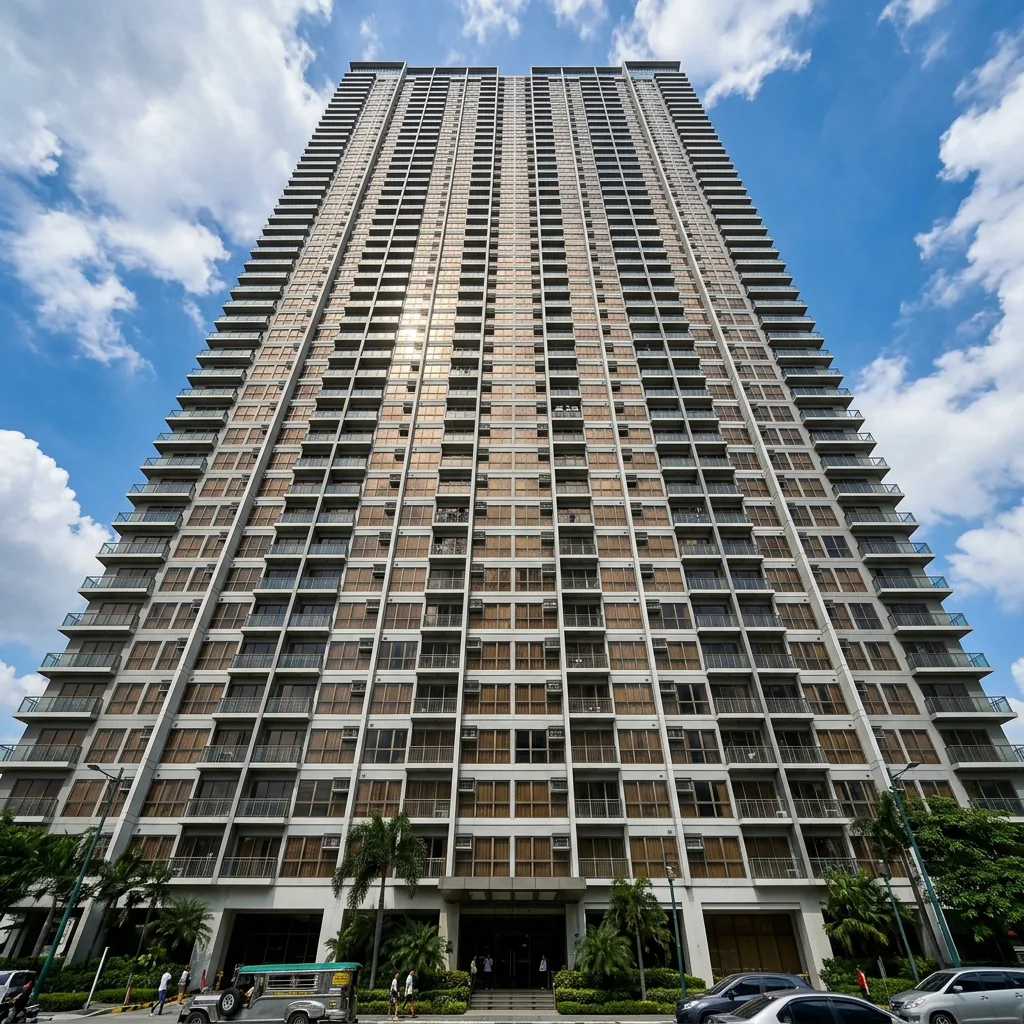
Replacing windows in a Philippine condo is nothing like replacing windows in a house. You cannot simply call an installer and schedule a Saturday morning. There are building management permits. HOA approvals. Facade color matching. Elevator reservations. Noise curfews. And if you get any of these wrong, your application gets rejected and you wait another 2 to 4 weeks to reapply. This guide covers every step — because we have done this in over 200 condo buildings across Metro Manila, and we know exactly where projects stall.
Why Condo Windows Fail Faster Than House Windows
Most Philippine condo developers install the cheapest windows that pass structural certification. This is not negligence — it is economics. When a developer builds 800 units, every ₱1,000 saved per unit window is ₱800,000 off the project cost. The result: you move into a beautiful new condo with windows that are engineered to last 5 to 8 years, not 15 to 25.
The typical developer-installed condo window is Series 798 (or lower) with 1.0mm gauge aluminum, basic nylon rollers, single wool-pile weatherstripping, and 5mm to 6mm annealed clear glass. By year 5, the rollers are worn, the weatherstripping is compressed flat, and the frame sealant has cracked. By year 8, you are living with windows that rattle in wind, leak during rain, and waste 20 to 30 percent of your air conditioning output through air infiltration.
Common failure signs in aging condo windows:
Grinding noise when sliding — the nylon rollers have worn flat and are dragging on the track
Visible daylight gaps at meeting stiles — the weatherstripping no longer seals when panels close
Condensation dripping inside — air leaks allow humid air to contact the AC-cooled glass surface
Whistling in wind — gaps in the frame-to-wall sealant create pressure differentials that produce audible noise
Water pooling on sill during rain — clogged weep holes or cracked sealant allows wind-driven rain to penetrate
Step 1: Contact Building Management Before Anything Else
Do this before you request quotes from any installer. Every hour spent getting quotes is wasted if building management rejects the specification. Contact your property management office and request these specific documents:
| Document | What It Tells You | Why It Matters |
|---|---|---|
| Renovation Guidelines Manual | Rules for window modifications, permitted materials, work hours | Violations result in permit denial and potential fines |
| Approved Contractor List | Pre-approved installer companies, if any | Some buildings only allow listed contractors — saves you from quoting with companies that cannot work there |
| Facade Specification Sheet | Original aluminum color code, glass tint, profile series | Your replacement must match exactly — non-matching applications are rejected immediately |
| Work Schedule Restrictions | Permitted work hours and days | Typically 9AM-5PM weekdays only — this affects your installer's scheduling |
| Required Insurance Coverage | Minimum liability coverage for contractor | Usually ₱1M to ₱5M — your installer must carry this or the permit is denied |
Pro tip from experience: Ask your building admin if any other unit owners have recently replaced their windows. If yes, ask which installer they used and whether the process went smoothly. This gives you a pre-vetted installer who already knows your building's specific requirements, has existing relationships with the admin team, and has already submitted the required documentation once.
Step 2: Facade Color Matching — The Hidden Deal-Breaker
This is where most first-time condo window replacements fail. You select beautiful matte black frames for your new windows, submit the application, and building management rejects it because the existing facade is dark bronze. The rule is absolute: replacement windows must be indistinguishable from the original installation when viewed from outside.
What must match:
Aluminum frame color — exact RAL or powder coating color code. We can match from a physical sample (a small chip from the existing frame) or from the original specification document. Color matching accuracy is critical — "close enough" is not accepted.
Glass tint — if the building uses bronze-tinted glass, you cannot install clear glass, even if the view would be better. The exterior appearance must remain uniform.
Profile visible width — the frame profile visible from outside must match the original width. This usually means using the same aluminum series or one with an equivalent exterior profile dimension.
Handle/lock position — some buildings even specify that hardware must be in the same position as the original to maintain visual uniformity from the street.
Step 3: Choosing the Right Upgrade
Since you are already going through the effort and cost of replacement, this is your one chance to upgrade the window specification without paying for a separate project later. Here are the upgrades that deliver real value in condo living:
| Upgrade | What It Does | Cost Premium | Worth It? |
|---|---|---|---|
| Tempered glass (from annealed) | 4-5x stronger, safe breakage pattern | +15-20% | ✅ Always yes — safety essential at height |
| Tinted glass (from clear) | Reduces solar heat gain 30-55% | +10-15% | ✅ Yes for west/south-facing units |
| Laminated acoustic glass | Reduces noise 30-35 dB (vs 26 dB standard) | +25-40% | ✅ Yes if unit faces EDSA, C5, highway |
| Double-glazed IGU | Insulation + noise + AC savings | +60-80% | ⚖️ Only for west-facing or premium units |
| Heavy-duty rollers (stainless steel) | Smooth operation for 15+ years | +₱500-1,000/window | ✅ Always yes — the best-value upgrade |
| Multi-point lock (from cam lock) | Superior security + compression seal | +₱1,200-2,000/window | ✅ Yes for ground-level and low floors |
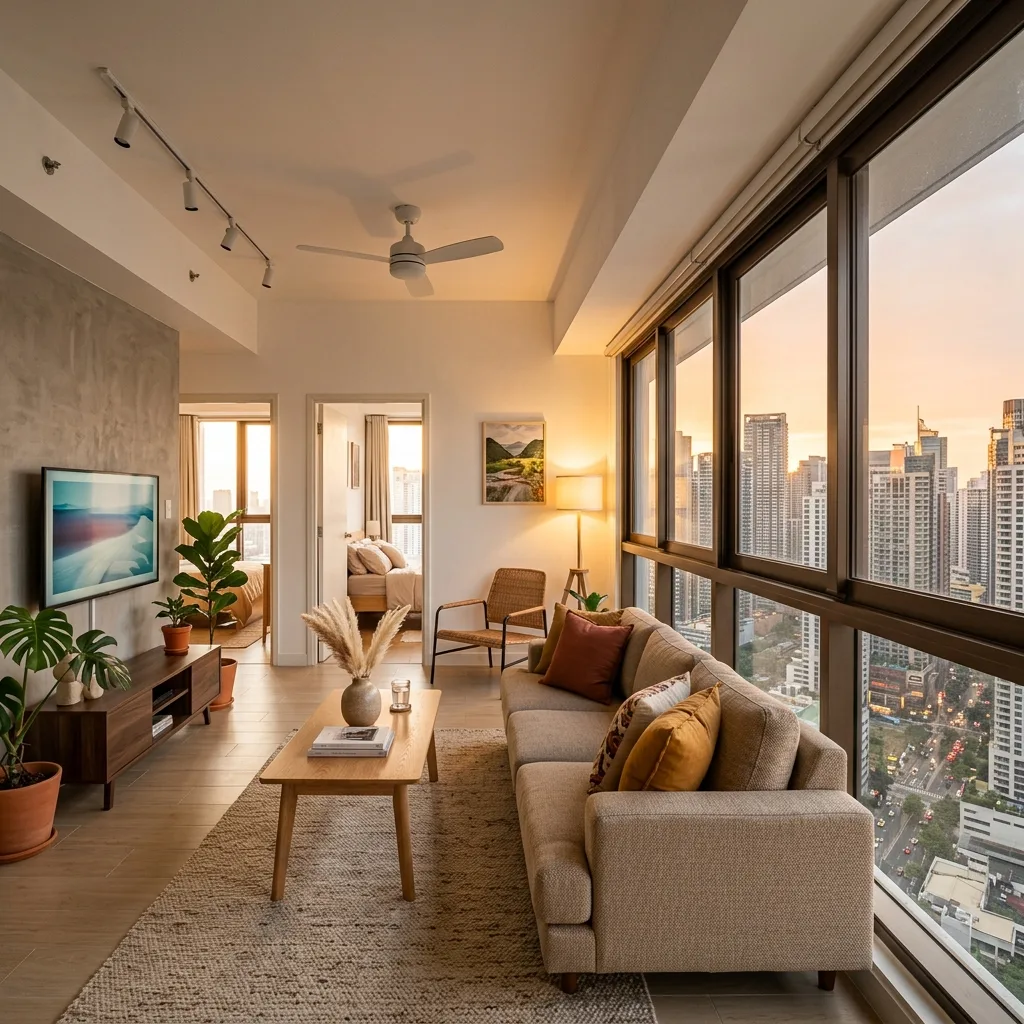
Our standard condo upgrade recommendation: Tempered tinted glass + stainless steel rollers + double wool-pile weatherstripping. This combination addresses the three most common condo complaints (heat, noise, worn rollers) with only a 20 to 30 percent cost premium over the baseline developer specification. The payback through reduced AC electricity costs is typically 18 to 24 months.
Step 4: Building Management Coordination
A professional installer handles all of this coordination — you should not have to manage the paperwork yourself. Here is what happens behind the scenes:
Work permit application — submitted 3 to 7 business days before the scheduled installation date. Includes contractor credentials, insurance certificate, detailed work scope, materials list, and scheduled dates.
Service elevator booking — dedicated time slots for transporting aluminum frames (up to 3 meters long), glass panels, and tools to your floor. This is typically the bottleneck — service elevators are shared with other renovation projects and move-ins.
Common area protection — plywood or plastic floor coverings and wall corner protectors along the entire route from service elevator to your unit door. Building management inspects this before allowing work to begin.
Security clearance — worker ID photos and names submitted to building security. Each worker receives a temporary building pass. Unauthorized workers are turned away at the lobby.
Debris disposal coordination — old frames, broken glass, and packaging materials must exit the building through the service elevator and loading dock, not through the lobby or parking areas.
Condo Replacement Costs (2026)
| Unit Type | Typical Windows | Standard Spec | Upgraded Spec |
|---|---|---|---|
| Studio (25-35 sqm) | 2 sliding windows | ₱20,000 – ₱35,000 | ₱28,000 – ₱48,000 |
| 1-BR (35-50 sqm) | 3-4 sliding windows | ₱30,000 – ₱50,000 | ₱42,000 – ₱70,000 |
| 2-BR (50-80 sqm) | 4-6 mixed type | ₱45,000 – ₱75,000 | ₱63,000 – ₱105,000 |
| 3-BR / Penthouse | 6-10 windows | ₱80,000 – ₱150,000 | ₱112,000 – ₱210,000 |
Prices include materials, labor, building coordination, common area protection, debris disposal, and post-installation hose testing. Add 10 to 15 percent for floors above the 20th level due to additional logistics complexity, longer elevator transit times, and higher wind exposure during installation.
Hidden costs most quotes exclude: Building management work permit fee (₱2,000 to ₱5,000 per project), refundable security deposit (₱5,000 to ₱15,000), common area damage deposit (₱3,000 to ₱10,000). Ask your installer if these are included in their quotation — our quotes include everything except the refundable building deposits.
The Noise Problem — and Your One Chance to Fix It
If your condo faces a major road — EDSA, C5, Macapagal Boulevard, SLEX service roads, or provincial highways — traffic noise is the number one quality-of-life issue. Developer windows provide approximately 26 to 28 STC (Sound Transmission Class) noise reduction. That is barely noticeable — you hear every truck, bus, and motorcycle clearly.
Since you are already replacing the frames, this is your one chance to upgrade to acoustic glass at a fraction of the standalone cost. The incremental cost difference between standard 6mm tempered and 6.38mm laminated acoustic glass is only 25 to 40 percent on the glass panels — a few thousand pesos per window. Doing this as a separate project later means removing the new frames again, which doubles the labor cost.
| Glass Specification | Noise Reduction (STC) | Best For |
|---|---|---|
| 6mm tempered clear (standard) | 26-28 dB | Quiet residential streets |
| 6mm tempered tinted | 26-28 dB | Heat reduction (same noise performance) |
| 6.38mm laminated (acoustic PVB) | 32-35 dB | Secondary roads, moderate traffic |
| 10.38mm laminated acoustic | 35-38 dB | Major highways (EDSA, C5) |
| Double-glazed IGU (6+12+6mm) | 32-38 dB | Maximum noise + thermal performance |
The difference between 28 dB and 35 dB reduction sounds small numerically, but it is dramatic in practice. Every 10 dB reduction is perceived as roughly half the loudness. Going from 28 to 35 dB means traffic noise in your bedroom drops from "constantly audible conversation level" to "barely noticeable background hum." For many condo residents, this single upgrade transforms their living experience.
Typical Timeline (2-BR Unit)
| Phase | Duration | What Happens |
|---|---|---|
| Site measurement | Day 1 (1-2 hours) | Laser measurement of every window opening, existing spec documentation |
| Quotation | Day 2-3 | Detailed itemized quote with standard and upgrade options |
| Building permit processing | Day 3-10 | Application submission, admin review, deposit payment |
| Fabrication | Day 7-14 | Frame fabrication, glass cutting/tempering, color matching (overlaps with permit) |
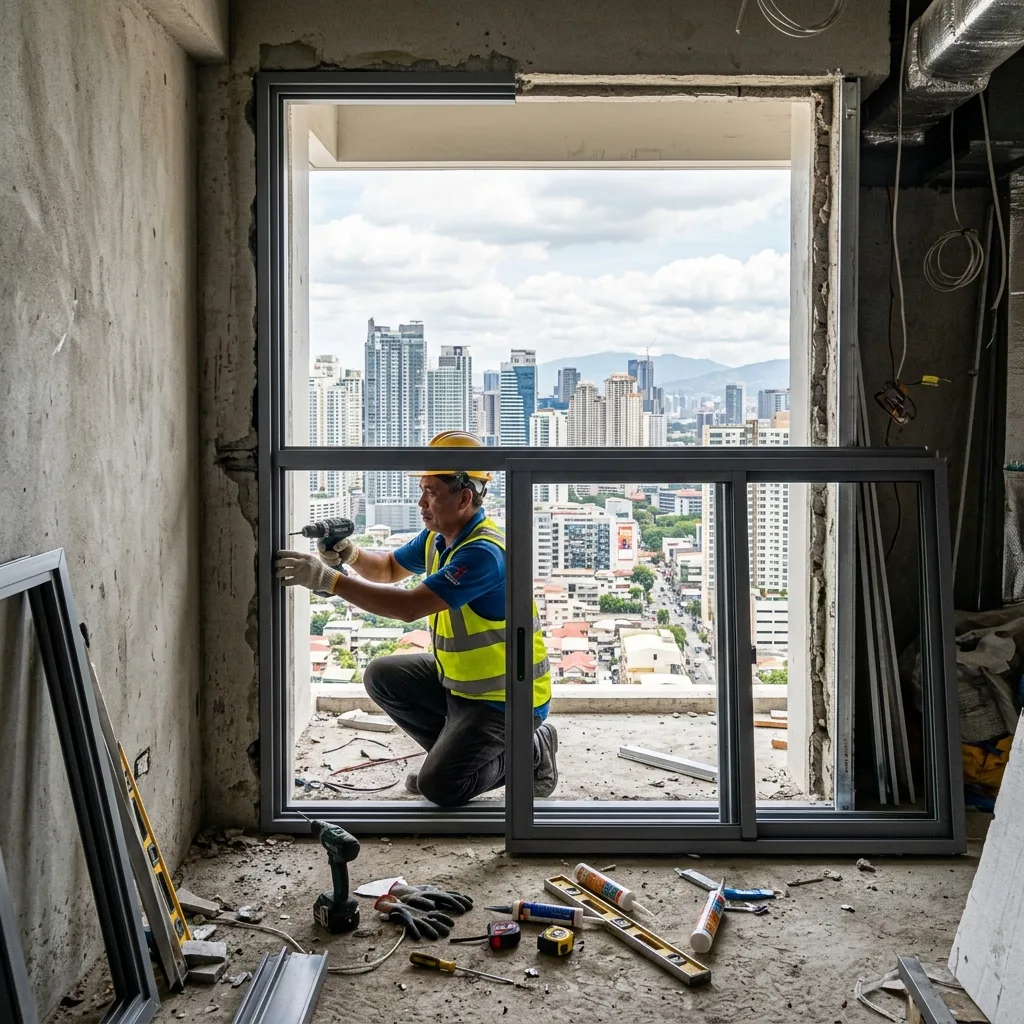
| Installation | Day 14-16 (1-2 days) | Old frame removal, new frame installation, glass mounting, sealant application |
| Hose test + handover | Day 16 | Water spray test for leaks, hardware adjustment, cleanup, unit owner sign-off |
Total: approximately 2 to 3 weeks from initial measurement to completed installation. The building permit processing phase is typically the longest — some buildings process permits in 3 business days, others take 7 to 10. We submit the permit application the same day you confirm the quotation to minimize waiting time.
Common Mistakes Condo Owners Make
Mistake 1: Hiring a house installer for condo work — house window installers often have no experience with building management coordination, service elevator logistics, or facade matching requirements. The permit gets rejected, the installer does not know why, and you lose 2 to 4 weeks waiting to reapply.
Mistake 2: Choosing the cheapest quote — the cheapest quotes typically exclude building coordination fees, common area protection, debris disposal, and hose testing. You end up paying for these as "extras" that bring the total above the mid-range quotes that included them from the start.
Mistake 3: Not upgrading during replacement — replacing with the same developer specification wastes the opportunity. The labor and building coordination costs are the same whether you install basic or upgraded windows. The upgrade premium is only on materials — and the materials difference between basic and good is surprisingly small.
Mistake 4: Not coordinating with neighbors — if multiple units on the same floor need window replacement, coordinating a batch project reduces per-unit building coordination costs, shares the service elevator booking, and may qualify for volume pricing from the installer.
Mistake 5: Scheduling during peak renovation season — January through March and September through November are peak condo renovation months. Building permit queues are longest during these periods. If possible, schedule your replacement during off-peak months (April through June) for faster processing.
Our Condo Window Process
We have completed window replacements in over 200 condo buildings across Metro Manila — from studio units in Makati to penthouses in BGC. Our process is designed specifically for condo work: we handle all building management coordination, carry the required insurance coverage, maintain relationships with property management teams across major developments, and include common area protection, debris disposal, and hose testing in every quotation. No hidden fees. No surprises on installation day. Send us your building name and unit type, and we will provide a complete quotation within 48 hours.
Ready to Upgrade Your Condo Windows?
Free site visit, laser measurement, and detailed quotation — including all building coordination. No hidden fees.